The Physics of Blast Forces
Distance as the First Layer of Protection
Designing Materials to Absorb Blast Energy
Extending Protection with Coatings and Composite Systems
Using Structural Form to Redirect Blast Loads
Integrating Protection into a Layered Design Strategy
Conclusion: Designing Infrastructure for Blast Resilience
References and Further Reading
Explosions impose forces on structures that ordinary construction was never meant to withstand. For military planners and defense engineers, that reality shapes how facilities are designed from the ground up.
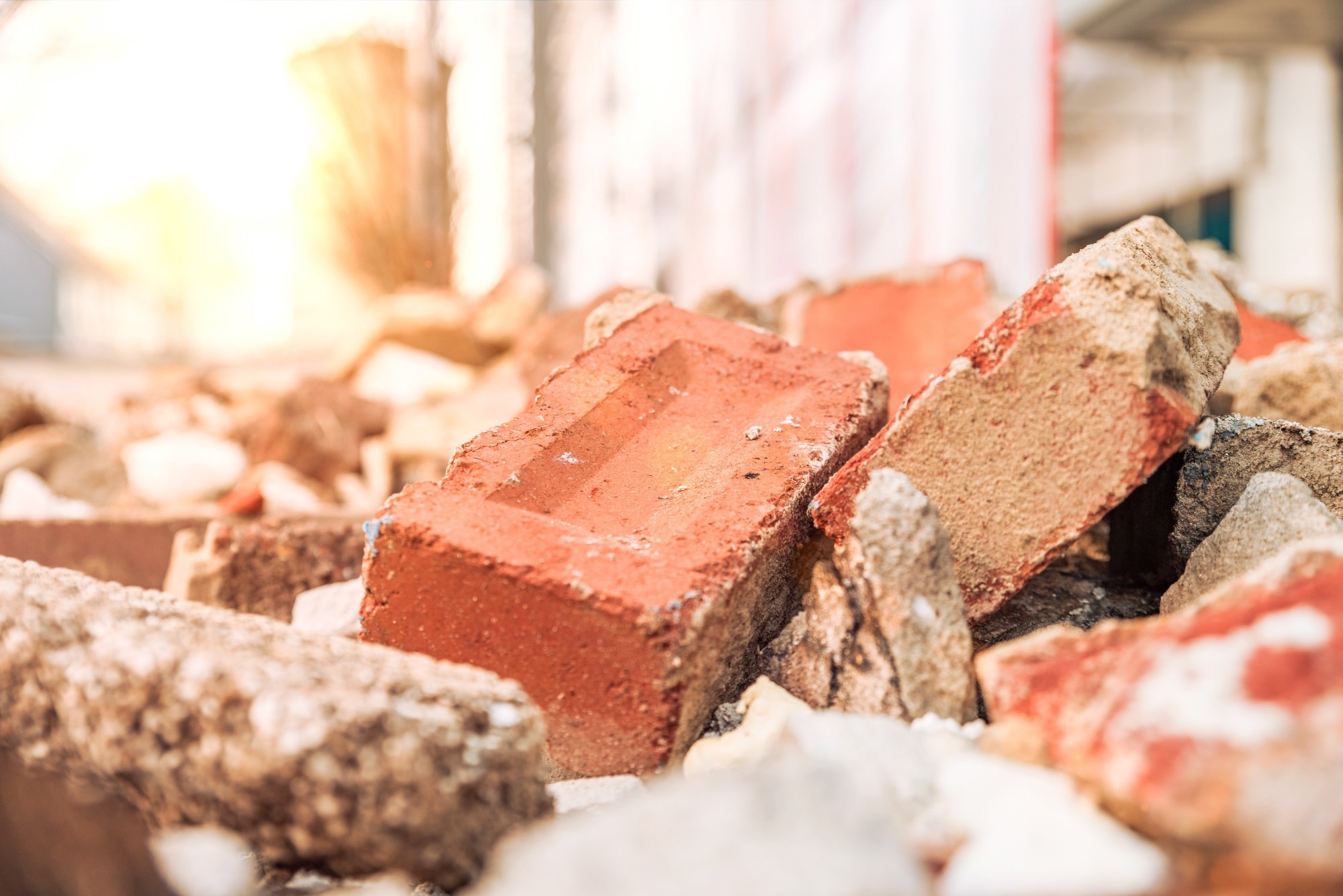
Image Credit: Alessandro28/Shutterstock.com
Threats may come from improvised explosive devices, guided missiles, or other high-energy weapons, each capable of delivering intense shock loads to the built environment. Creating infrastructure that can survive those conditions requires more than strengthening walls. Engineers must account for how blast waves behave, how materials absorb energy, and how the shape and layout of a site influence the way pressure moves through a structure.
These are design problems rarely encountered in civilian construction, but they sit at the center of modern defense engineering.
Save this PDF for later by downloading it here.
The Physics of Blast Forces
Among those challenges, understanding the behavior of the blast wave is one of the most important starting points. Before engineers can make any structural decisions, they need to understand how an explosion interacts with the built environment.
When an explosion occurs, it generates a supersonic pressure front that travels outward in all directions. This front has two primary damaging components. The first is peak overpressure, the sudden rise in pressure above normal atmospheric levels that presents the most immediate threat to structures. The second is dynamic pressure, produced by the high-speed winds that follow the shock front and exert drag forces on exposed surfaces.1
The pressure field and impulse behind the shock front vary significantly depending on the size and geometry of the structure receiving the load. In practice, this means the shape and scale of a building influence survivability just as much as the materials used to construct it.
For example, a 22.5 kg explosive charge can cause concrete columns to collapse from distances as close as 4.5 meters away. Debris may also be projected up to 20 meters from the point of detonation. These realities highlight a central design principle: increasing the distance between a potential blast and critical structures can significantly improve safety and reduce damage.2
Distance as the First Layer of Protection
One of the most effective ways to reduce blast damage is surprisingly simple: distance. In blast-resistant design, standoff distance, or the physical space between a potential blast source and a building, often serves as the first line of protection.
The energy released by an explosion dissipates rapidly with distance. Because of this, site planning can play a decisive role in blast mitigation. Creating additional separation between potential threats and critical infrastructure can significantly reduce the structural loads a building must endure, often limiting the need for extensive structural reinforcement.
At close range, even a moderately sized explosive device can cause severe damage, including the failure of load-bearing columns. When these elements fail, the result can be a progressive collapse, where the loss of one structural component triggers failures in adjacent parts of the structure.2,3
As the distance from the blast source increases, however, the pressure acting on the structure becomes more evenly distributed. Under these conditions, facade systems and reinforced walls are better able to absorb and manage the load without catastrophic failure. Maintaining this protective distance typically involves measures such as perimeter barriers, vehicle exclusion zones, and electronic detection systems. Together, these features turn the site boundary into an active layer of protection, helping keep potential threats away from the structure itself.2,3
Designing Materials to Absorb Blast Energy
Distance can significantly reduce blast loads, but it cannot eliminate them entirely. When those forces reach the structure itself, the material properties of the building envelope often determine how well it performs under blast conditions.
Standard concrete, for example, tends to fail in a brittle manner when subjected to explosive loading because it performs poorly in tension.
One common result is spalling, where fragments break away from the rear surface of the concrete and can become dangerous projectiles. Ultra-High-Performance Concrete (UHPC) addresses this weakness through a dense, low-porosity matrix reinforced with steel or synthetic fibers. This internal reinforcement helps prevent cracks from propagating through the material and significantly improves its tensile capacity. As a result, structures built with UHPC are able to absorb far more energy during blast events than those made with conventional concrete.4,5
Fiber reinforcement also helps control fragmentation, a failure mode that traditional concrete mixes struggle to manage. Another emerging approach involves the use of carbon fiber–reinforced polymer (CFRP) rebar. A recent study published in ACS Omega found that reinforced concrete shear walls with full CFRP reinforcement showed the highest blast resistance among the tested configurations, transmitting the least amount of energy through the wall and producing minimal back-surface damage.5
Extending Protection with Coatings and Composite Systems
Even advanced structural materials have limits, which is why additional protection layers are often introduced at the surface level. Coatings and composite systems extend the performance of structural materials by helping manage the energy that reaches the building envelope.
Polyurea, a rapidly curing polymer, has become a widely used option in blast protection. During an explosion, it works in two phases. First, it absorbs part of the shock wave by undergoing significant deformation. As the structure rebounds, the material then releases the stored energy. When polyurea is combined with steel plates in a viscoelastic composite system, the arrangement can both dissipate energy and control structural deformation. This layered configuration allows structures to perform more effectively under blast loading.
Other material innovations focus on increasing flexibility under explosive forces. One example is recycled tire fiber concrete, which incorporates rubber fibers into the cement matrix. These fibers improve ductility and help limit spalling in wall panels, reducing fragmentation and improving overall structural safety during blast events.6,7
Materials and protective layers influence how a structure absorbs blast energy, but the overall form of a building also plays an important role in how that energy is distributed.
Flat vertical surfaces tend to reflect blast waves directly back toward the source, which can concentrate pressure and increase damage at specific points. Angled or curved surfaces, by contrast, help redirect the blast wave and reduce the amount of pressure acting on any single area. In effect, the geometry of a structure can shape how the shock wave moves around it.
Research published in Scientific Reports shows that structures with V-shaped and pyramid-shaped geometries are more effective at reducing shock waves than flat walls. Taller pyramid configurations, in particular, provide improved protection under both weak and strong blast conditions.8,9
Geometry also plays a critical role in underground defense structures such as bunkers and command centers. In these environments, both depth and lining materials influence how the surrounding ground transmits explosive loads. Studies indicate that concrete tunnel linings achieve the best blast resistance when they contain roughly 2.5 % steel fibers by volume, improving their ability to absorb and distribute the stresses generated by an explosion.8,9
Integrating Protection into a Layered Design Strategy
Blast-resilient defense infrastructure rarely relies on a single protective measure. Instead, effective designs combine multiple layers of protection working together. Standoff distance, structural materials, surface coatings, and geometric form each contribute to how a facility responds when exposed to explosive forces.
Functionally Graded Cementitious Composites (FGCC) illustrate this layered approach in practice. These systems use different types of ultra-high-performance concrete arranged in stages, with each layer designed for a specific function. The outer layer resists penetration from the initial blast effects, the middle layer absorbs energy as cracks begin to form, and the inner layer preserves structural integrity under load.
This graduated design reflects a broader shift in defense engineering. Rather than relying solely on mass or hardness for protection, modern approaches focus on managing how energy moves through a structure. By distributing that energy across multiple layers and systems, engineers can design facilities that remain structurally functional even after a blast event - maintaining the operational continuity that defense missions require.10
Conclusion: Designing Infrastructure for Blast Resilience
Designing infrastructure that can withstand explosive threats requires far more than simply strengthening individual components. As this article has shown, blast resilience emerges from a combination of strategies working together. Understanding how blast waves behave provides the foundation. Creating a standoff distance reduces the intensity of the forces involved. Advanced materials, protective coatings, and thoughtful structural geometry then help absorb, redirect, and manage the energy that ultimately reaches the structure.
Taken together, these measures reflect a broader shift in how defense infrastructure is designed. Rather than relying on mass alone, modern approaches focus on controlling how energy moves through a system. When distance, materials, and structural form are treated as parts of a coordinated design strategy, facilities can maintain structural integrity and continue operating even after a blast event.
For engineers and planners working in high-risk environments, this layered approach is becoming an essential principle of resilient design.
References and Further Reading
- Isaac, O. S. et al. (2023)...
- Blast Mitigation Considerations Guide. (2021)...
- Chapter-3: Blast Effects on Buildings and People...
- Das, N., & Nanthagopalan, P. (2022)...
- Yazici, C., & Özkal, F. M. (2025)...
- Shadan, P., Sharafi, P., & Saeed, N. (2024)...
- Zhang, R. et al. (2025)...
- Liu, X. (2024)...
- Lu, S., Li, Y., & Suo, T. (2025)...
- Hambling, D. (2025)...
Disclaimer: The views expressed here are those of the author expressed in their private capacity and do not necessarily represent the views of AZoM.com Limited T/A AZoNetwork the owner and operator of this website. This disclaimer forms part of the Terms and conditions of use of this website.