Steel and Concrete in Construction
Comparative Analysis of Multi-story Buildings
Performance in High-risk Seismic Zones
Conclusion
References and Further Reading
Modern buildings rely heavily on two structural workhorses: steel and reinforced cement concrete (RCC). While both are fundamental to contemporary construction, they behave quite differently once loads, movement, and environmental forces come into play.
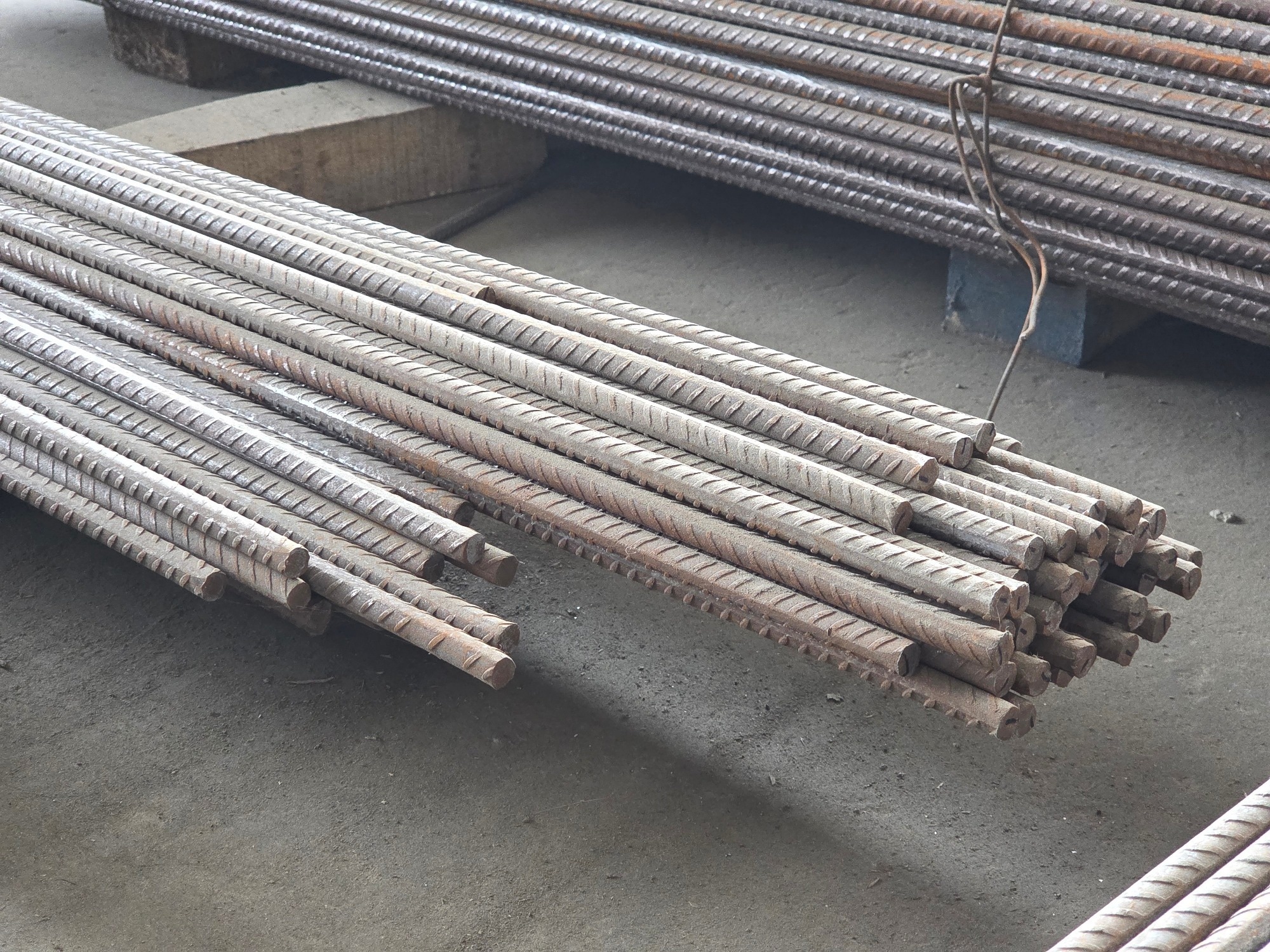
Image Credit: Anjasrizkip/Shutterstock.com
One of the most important distinctions between them is flexibility: how a structure bends, absorbs energy, and responds to stress without failing.
The way a material responds to stress shapes design decisions, influences performance, and ultimately affects how a structure holds up over time. Understanding how steel and RCC behave under different conditions allows engineers to make choices that are not just efficient and durable, but appropriate to how buildings are actually used.1-4
Save this PDF for later by downloading it here.
Steel and Concrete in Construction
In building design, choosing the right structural system is one of the decisions that can have a knock-on effect for almost everything else - cost, construction time, safety, and even long-term sustainability. As cities grow denser and land becomes more limited, the pressure to build taller and use space more efficiently has only increased.
RCC has long been the default choice, largely because it offers a dependable balance of fire resistance, durability, and relatively low material cost. It works well across a wide range of applications as it combines concrete’s compressive strength with the tensile capacity of steel reinforcement. That said, it does come with limitations, including reduced span flexibility, higher dead loads, and comparatively lower stiffness.1-4
Steel structures, on the other hand, are increasingly used where speed, efficiency, and flexibility matter more. Its high strength-to-weight ratio allows for lighter structures, quicker construction, and greater design freedom, which makes it particularly well-suited to high-rise buildings and large-span structures such as stadiums.
These differences become more pronounced in seismic zones, where material behavior under stress is critical. Steel’s ductility and ability to absorb energy generally lead to lower displacement and reduced story drift during earthquakes. RCC can still perform well when designed properly, but it tends to be less adaptable under the same conditions.
While steel often involves higher upfront costs, its speed of construction and long-term performance can offset this over time. RCC, by contrast, remains a practical choice for budget-sensitive projects where it can meet safety requirements without added complexity.1-4
Comparative Analysis of Multi-story Buildings
These differences become easier to see when both systems are placed side by side under the same conditions. A recent study published in the International Journal of Original Recent Advanced Research does exactly that, comparing RCC and steel systems in multi-story buildings using STAAD.Pro for structural analysis and design.
In this case, a G+10 commercial building was modeled for both systems under identical design and loading conditions, across seismic Zones II, IV, and V. This allowed the comparison to focus on how each structure responds to the same set of demands (particularly gravity and seismic loads) without variation in the setup. Alongside structural performance, the study also considered factors such as maintenance and adaptability.
The analysis combined detailed modeling with practical considerations. Using STAAD.Pro V8i, the systems were evaluated based on material efficiency, displacement, drift, stress, seismic response, and construction-related aspects like labor and timelines. The results were standardized to allow direct comparison, and sensitivity analysis was used to examine how changes in height, configuration, and loading affected performance.
Hybrid systems were not included to keep the comparison focused.1
The findings highlight a clear trade-off in that steel structures were significantly lighter (by about 38.6 %), which reduced foundation loads. They also enabled faster construction, by roughly 49.7 %, and showed improved material efficiency, with savings of around 16.9 %. These advantages make steel particularly suitable for projects where speed and reduced structural weight are important.
RCC, however, performed better in terms of stability. It showed lower seismic displacement between 13.6 % and 24.0 % less and benefits from inherent fire resistance. This makes it a strong option where controlling movement and maintaining stiffness are key priorities. The differences become more pronounced as building height increases, especially beyond 15 stories, where the self-weight of concrete begins to limit its efficiency. Overall, the comparison makes it easier to see how each system performs when the conditions are held constant.1
The differences between steel and RCC become even more noticeable in high-risk seismic settings, where how a structure moves can matter just as much as how strong it is. A separate study, published in Materials Research Proceedings, looks at this more closely by comparing the two systems in a three-story warehouse located in Tangerang, Indonesia.
Both structures were modeled using ETABS and designed in line with SNI and AISC standards, with the comparison centred on displacement and story drift. The building itself was relatively modest in scale at just over 13 metres in height, but still large enough to show how each system behaves under seismic loading.
Two design options were developed, one using reinforced concrete and the other steel, with each sized according to the relevant code requirements.
Even within this smaller structure, the contrast is clear. The steel building showed significantly higher deformation, with a maximum roof displacement of 0.148 m in the Y direction, compared to 0.048 m for the concrete structure. Story drift followed the same pattern, with steel reaching 0.065 m versus 0.029 m for RCC. This reflects steel’s greater flexibility and ductility, allowing it to deform more and absorb seismic energy rather than resisting it rigidly.
At the same time, the weight difference between the two systems plays an important role. The reinforced concrete structure was considerably heavier, with a total weight of 14,995.6 kN, while the steel structure weighed 8,416.3 kN. This directly affected seismic forces, with the concrete building experiencing nearly double the base shear in the X direction.
In simple terms, heavier structures tend to attract larger seismic forces, even if they move less.
Both systems remained within acceptable design limits, but they approached the problem differently. RCC provided greater stiffness and controlled movement more effectively, while steel allowed for larger deformations and better energy dissipation.
Neither approach is inherently better in every case, as it depends on whether the priority is limiting movement or allowing the structure to absorb and redistribute seismic energy.2
Conclusion
Steel and RCC approach structural performance from two different directions, and that difference shows up most clearly in how they handle flexibility. Steel tends to allow more movement; it is more ductile, better at absorbing energy, and generally performs well under dynamic loads such as seismic forces. RCC, by contrast, is stiffer, limits displacement more effectively, and offers advantages in areas like fire resistance.
The comparisons discussed here make those differences easier to see in practice.
Steel’s lower weight and greater flexibility make it well-suited to taller buildings and environments where adaptability under load is important. RCC remains a reliable option where stability, cost control, and reduced movement are the priority.
In the end, the choice between the two is less about which material is better overall and more about what the structure is expected to do. Balancing flexibility, safety, cost, and performance requirements is what ultimately guides that decision.
If you’re interested in how these ideas apply in practice, there’s plenty more to look at. Hybrid steel–concrete systems, for example, are increasingly used to balance strength, flexibility, and cost in high-rise construction. You might also want to look into performance-based seismic design, which focuses on how structures are expected to behave under real earthquake conditions rather than just meeting code minimums.
References and Further Reading
- Banjare, V., Sahu, M. S., & Verma, M. S. (2025) Comparative Study of RCC and Steel Structures for Structural Efficiency Using STAAD. PRO. International Journal of Original Recent Advanced Research, 2(3). https://ijorarjournal.com/web/Download/2025-05-12-03-53-21-Paper%20Id%200577.pdf
- Djebbari, I., Hermawan, F., Wijaya, U., & Wibisono, E. S. P. (2025) Comparative analysis of structural performance and cost efficiency of reinforced concrete and steel for a three-story warehouse in high-risk seismic zones. Materials Research Proceedings, 48, 153-160. DOI: 10.21741/9781644903414-18, https://mrforum.com/product/9781644903414-18/
- Mostafaei, H., Ashoori Barmchi, M., & Bahmani, H. (2025). Seismic resilience and sustainability: A comparative analysis of steel and reinforced structures. Buildings, 15(10), 1613. DOI: 10.3390/buildings15101613, https://www.mdpi.com/2075-5309/15/10/1613
- Islam, M. M., Abir, A. R., & Chanda, A. (2025). Illustrative Structural Comparison of RCC and Steel Structures Based on Numerical Analysis: An Educational Perspective. International Journal of Structural Analysis and Advanced Construction Techniques, 1(2), 53-75. DOI:10.46610/IJSAACT.2025.v01i02.005, https://www.researchgate.net/publication/397740763_Illustrative_Structural_Comparison_of_RCC_and_Steel_Structures_Based_on_Numerical_Analysis_An_Educational_Perspective
Disclaimer: The views expressed here are those of the author expressed in their private capacity and do not necessarily represent the views of AZoM.com Limited T/A AZoNetwork the owner and operator of this website. This disclaimer forms part of the Terms and conditions of use of this website.