 By Ankit SinghReviewed by Susha Cheriyedath, M.Sc.Apr 27 2026
A skyscraper that stands perfectly rigid in a storm is a structural liability. Engineers design the world's tallest buildings to sway a little because this controlled lateral movement protects the structure from forces far too powerful to overcome through stiffness alone. This principle, developed through decades of structural research and material science, governs how modern high-rise buildings are conceived and built to endure.
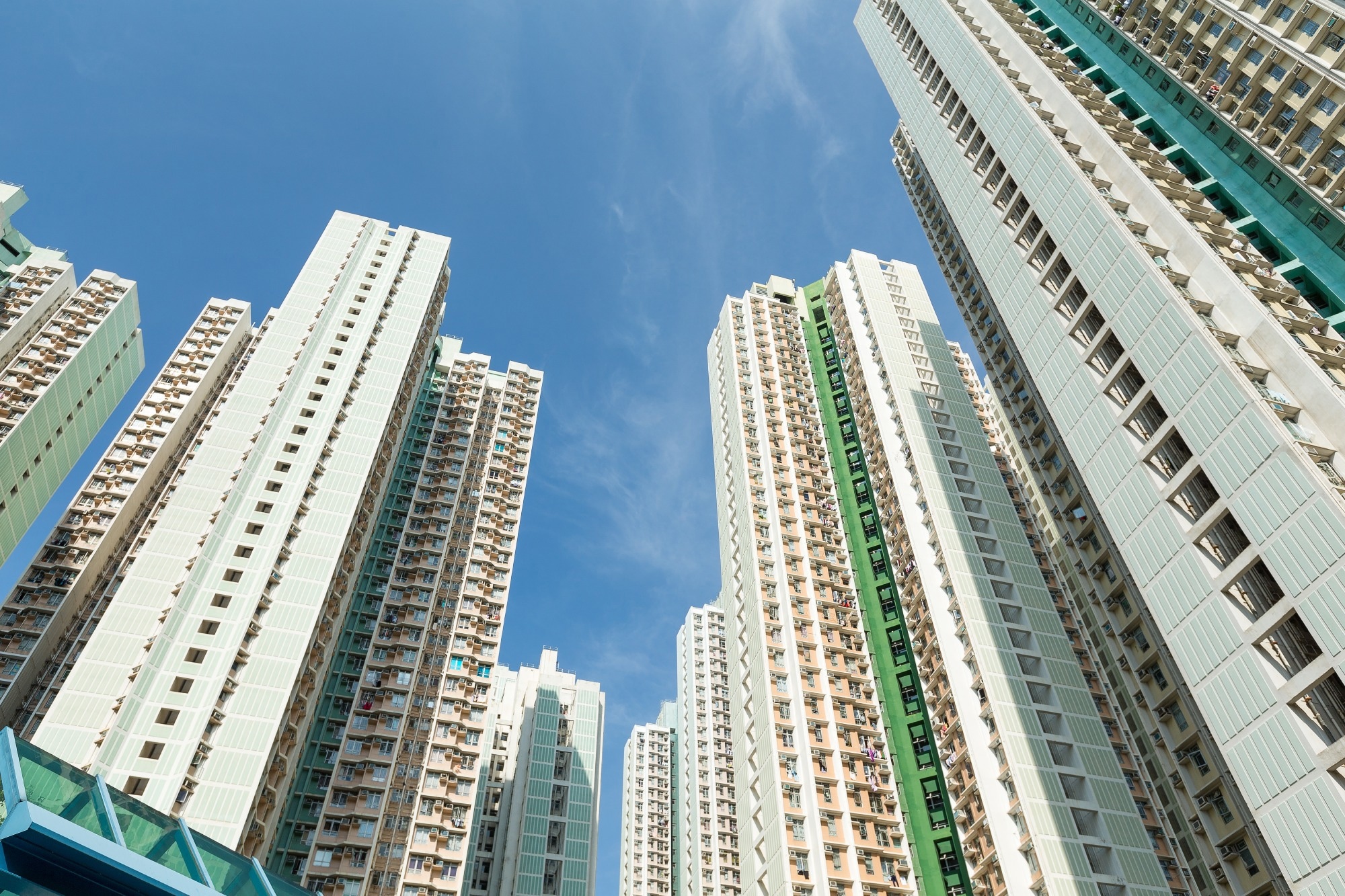 Image Credit: leungchopan/Shutterstock
Understanding Intentional Flexibility in Structural Design
The idea of intentional flexibility is based on how different materials respond under stress. In rigid structures, the pressure gets concentrated at specific points. When those points are pushed too hard, they can break suddenly and unexpectedly.1
On the other hand, flexible structures spread out the force over a larger area, helping to absorb the energy instead of letting it build up. For example, steel, commonly used in tall buildings, has a natural ability to bend under weight. This allows it to adjust and then return to its original shape, which engineers take into account when designing structures.1
Wind as a Structural Force
Wind loading defines the structural design of every supertall building. As height increases, wind speeds rise dramatically, and the lateral pressure a building must resist grows with the square of the wind velocity. A tower standing 1,000 feet above grade experiences wind forces that are much stronger than those affecting shorter buildings. This means that the design of skyscrapers must take into account the intense pressure from the wind pushing against them, especially on the side facing the wind.2
The wind profile across a tall building's height is also nonuniform. Mean wind velocity increases continuously from the ground to the roof, creating a gradient that generates both horizontal displacement and rotational forces simultaneously. Research in structural dynamics confirms that torsional responses coupled with translational responses compound stress on a building's frame, and engineers must account for both modes of movement during the design phase to ensure structural resilience.2,3
Vortex Shedding and Resonance
One of the most dangerous aerodynamic effects on tall buildings is vortex shedding. When wind flows past a building's edges, it separates and forms alternating vortices on each side of the structure. These vortices generate oscillating lateral forces, and when their shedding frequency synchronizes with the building's natural frequency. It leads to resonance, a condition where lateral movement amplifies far beyond what steady wind pressure would produce.4
Buildings that have the same shape from top to bottom can be more susceptible to strong swirling wind patterns known as Kármán vortex streets. These swirling winds create a side-to-side rocking motion that can increase over time if the building isn’t designed to handle it. To prevent this issue, engineers use various techniques to strengthen the building and alter its shape to disrupt these swirling winds before they can cause serious movement.4
The Principle of Controlled Flexibility
Engineers work within strict parameters that define how much a building may move. The broadly accepted upper limit for lateral sway is 1/500 of the building's total height. Beyond this threshold, occupants begin to experience physical discomfort even though the structure retains full integrity. A building that exceeds this limit does not face imminent collapse, but the perceived motion becomes a practical design failure for the people inside.1,5
Steel-framed buildings achieve controlled flexibility through moment-resisting frames. In these frames, beams and columns can rotate slightly at their connections under lateral load. This rotation distributes energy throughout the entire frame rather than concentrating it in a single element. The elastic range of movement gives a tall building the capacity to deflect, absorb energy, and return to vertical alignment without getting damaged over time.1
Tuned Mass Dampers
Tuned mass dampers (TMDs) are among the most widely used technologies for reducing sway in tall buildings. A TMD consists of a large mass, typically ranging from hundreds to thousands of metric tons, suspended within the upper floors of a building by springs and hydraulic dampers. When the building moves in one direction, the suspended mass lags due to inertia, and the resulting restoring force pulls the structure back toward the center.6
Each TMD is calibrated to match the natural frequency of the building it occupies, ensuring maximum effectiveness against the motion frequencies that the structure is most likely to experience. Research published in the International Journal of Civil Engineering and Architecture Engineering confirms that TMDs reduce peak accelerations and lateral displacements during common wind events. The study also found that buildings equipped with TMDs showed displacement reductions of up to 32% under combined wind and seismic loading compared to undamped structures.3
Saving this for later? Download a PDF here.
Aerodynamic Shaping
The exterior geometry of a skyscraper functions as a structural tool. Tapering a building as it rises reduces the surface area exposed to the strongest high-altitude winds. Features such as rounded or chamfered corners reduce pressure gradients that trigger vortex formation at the building's edges. Twisted facades, such as those used in the Shanghai Tower, disrupt synchronized vortex shedding across the building's full height and reduce the total oscillating lateral force the structure must manage.7,8
Aerodynamic modifications fall into two categories. Minor changes include corner cuts, rounding, and chamfering of the building's profile. Major changes include tapering the building form, introducing setbacks at different floor levels, and rotating the cross-section as it rises. Each approach alters how airflow separates from the surface, weakening the coherent vortex structures that drive oscillatory loading, and wind tunnel testing remains the standard method for validating these shapes before construction begins. 7,8
Seismic Forces and Ground Motion
Earthquakes exert a different kind of force on buildings than wind. Instead of pushing against the sides of a building, seismic forces start at the ground and move upward as the earth shakes. The weight of the building opposes this movement, creating additional forces on each floor. If the shaking of the ground matches the building's natural frequency, the dynamic response amplifies significantly without adequate design intervention.9
Engineers in seismic zones use base isolation systems that separate the building's superstructure from its foundation using layers of rubber bearings and steel plates. These bearings absorb ground motion before it travels into the structure, reducing the forces each floor must withstand. Combined with ductile structural detailing that permits controlled deformation without collapse, base isolation extends the fundamental sway principle directly into earthquake-resistant design.10
Outrigger Systems and Occupant Comfort
Outrigger structural systems are design features used in tall buildings to improve their stability. They connect the building's central core to the outer columns via stiff horizontal elements placed at strategic floor levels. This connection helps the outer columns manage the forces that can cause the building to sway during events like strong winds or earthquakes. As a result, it prevents too much movement between floors, keeping everything safely within limits and protecting both the building's framework and any non-structural components, like walls or ceilings.11
Human comfort sets a practical limit on tolerable sway, even with ample structural safety. Occupants notice motion at acceleration levels much lower than those that threaten the building, especially on upper floors, where movement is most pronounced. Engineers balance structural integrity and occupant experience by adjusting stiffness, damping, and mass distribution for a stable and secure environment.3,5
Built to Bend, Designed to Last
Building skyscrapers that can sway a little is an innovative way for engineers to think about strength. A tall building demonstrates strength through controlled, predictable, and recoverable movement rather than static resistance. Every tuned mass damper, outrigger, aerodynamic taper, and base isolator represents a calculated accommodation of force rather than a confrontation with it. As buildings grow taller and cities denser, this design philosophy will only become more central to how the built environment endures.
References and Further Reading
- Skyscrapers: Unraveling the Enigma of Their Swaying Motion. (2025). Skyscrapers World. https://skyscrapersworld.com/why-do-skyscrapers-sway
- Torkamani, M. A. M., & Pramono, E. (1985). Dynamic Response of Tall Building to Wind Excitation. Journal of Structural Engineering, 111(4), 805–825. DOI:10.1061/(asce)0733-9445(1985)111:4(805). https://ascelibrary.org/doi/10.1061/(ASCE)0733-9445(1985)111:4(805)
- Enkhsaikhan, N., & Bayarsaikhan, T. (2024). Analysis of high-rise building dynamics under wind and earthquake loads. International Journal of Civil Engineering and Architecture Engineering, 5(2), 43–48. DOI:10.22271/27078361.2024.v5.i2a.57. https://www.civilengineeringjournals.com/ijceae/archives/2024.v5.i2.A.57
- Obinna, U. (2020). Vortex Shedding and Wind Load Analysis of Tall Buildings. STRUCTVILLE. https://structville.com/2020/04/vortex-shedding-and-wind-load-analysis-of-tall-buildings.html
- How The World's Tallest Skyscrapers Work. The Science & Civil Structural Engineering Information. https://tallbuilding.blogfa.com/post/7
- Shirgir, S. et al. (2025). Reliability-Based Design Optimization of Tuned Mass Damper for Tall Buildings Considering Uncertainty of Soil-Structure Interaction. The Structural Design of Tall and Special Buildings, 34(14), e70075. DOI:10.1002/tal.70075. https://onlinelibrary.wiley.com/doi/full/10.1002/tal.70075
- Lopez, R. (2025). Aerodynamic Design in Skyscrapers – Balancing Wind Comfort and Structural Performance. Eastern Engineering Group. https://www.easternengineeringgroup.com/aerodynamic-design-in-skyscrapers-balancing-wind-comfort-and-structural-performance/
- Sharma, A. et al. (2018). Mitigation of wind load on tall buildings through aerodynamic modifications: Review. Journal of Building Engineering, 18, 180-194. DOI:10.1016/j.jobe.2018.03.005. https://www.sciencedirect.com/science/article/abs/pii/S2352710217305569
- Shehzad, A. et al. (2025). A systematic review on seismic resilience in high-rise structures to enhance outrigger systems. Structures, 82, 110753. DOI:10.1016/j.istruc.2025.110753. https://www.sciencedirect.com/science/article/abs/pii/S2352012425025706
- Bermany, T. H. et al. (2025). A state-of-the-art analysis of base isolation systems and future directions for developing a novel multi-directional smart-hybrid isolation system integrated with earthquake early warning system for building structures. Results in Engineering, 25, 104501. DOI:10.1016/j.rineng.2025.104501. https://www.sciencedirect.com/science/article/pii/S2590123025005766
- Shamanth, N., & Manohar, D. R. (2021). Outrigger Structural System in High-Rise Building. International Journal of Research in Engineering and Science (IJRES), Volume 9, Issue 8. https://www.ijres.org/papers/Volume-9/Issue-8/Series-7/N09087886.pdf
Disclaimer: The views expressed here are those of the author expressed in their private capacity and do not necessarily represent the views of AZoM.com Limited T/A AZoNetwork the owner and operator of this website. This disclaimer forms part of the Terms and conditions of use of this website.