 By Ankit SinghReviewed by Susha Cheriyedath, M.Sc.May 4 2026
Pipeline and offshore construction engineering requires coordinating solutions across material science, structural mechanics, geotechnical assessment, and digital technology simultaneously. The challenges outlined in this article reflect decades of accumulated industry experience and active research across multiple disciplines, and none of them exist in isolation from the others.
As the sector moves into deeper waters and longer operational lifespans, the engineering frameworks that support this infrastructure must improve in both technical rigor and operational adaptability for safe and reliable performance.
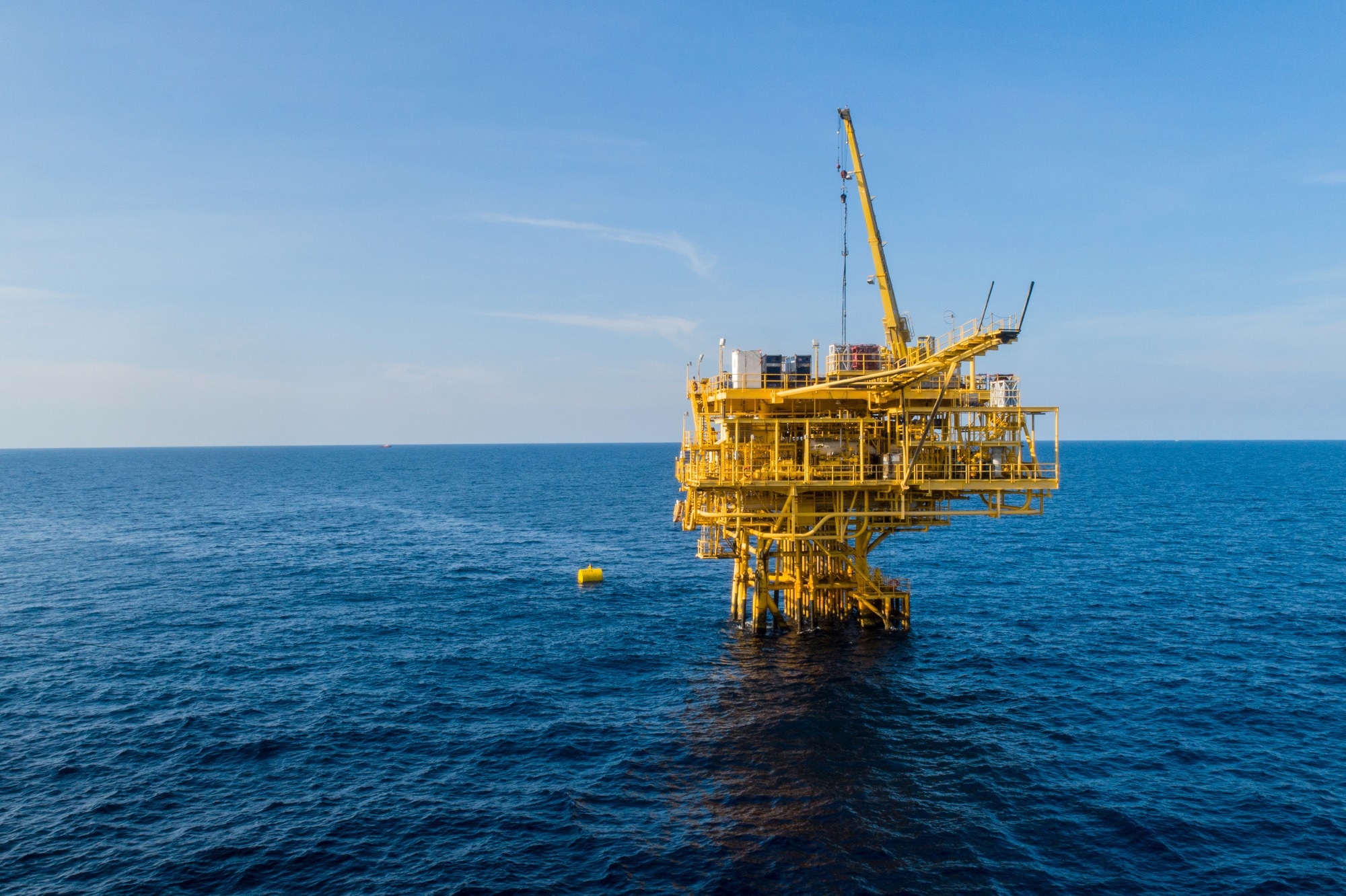 Image Credit: Amornsak Seema/Shutterstock
Where Complexity Begins
This global energy supply relies on a vast network of pipelines and offshore installations that span thousands of kilometers across land and seabed. In 2023 alone, industry statistics recorded more than 2800 km of new pipeline approved across global offshore projects, showing continuing demand for the same, even amid increasing engineering challenges.1
These systems deliver oil, gas, and other vital fluids under pressure across varied geographical terrains, from the Arctic continental shelf to equatorial deepwater basins, and construction processes must actively incorporate material science, structural engineering, and risk management in real time at every stage. There is a unique set of factors that come with offshore construction that are not common with land pipeline projects.1,2
High hydrostatic pressures, near-freezing seawater temperatures, variable seabed geology, and extreme operational distances set the stage for engineering decisions to have much greater consequences. The design and operation of offshore pipelines require risk management that accounts for technical, business, environmental, and societal factors simultaneously, and those requirements have become increasingly demanding as projects move into deeper water and more aggressive operating conditions.2
Deepwater Installation Methods and Their Constraints
Installing pipeline on the seabed requires specialized lay vessels that use distinct techniques depending on water depth and pipe diameter. The S-lay method dominates shallow-to-moderate depth installations, advancing pipe segments in an S-shaped profile from vessel to seabed while allowing multiple operations to proceed on deck simultaneously. This approach is very cost-effective for large-diameter, long-distance projects but requires substantial deck space and becomes progressively harder to manage as water depth increases because maintaining the S-curve under tension grows more difficult.3
In ultra-deepwater environments above 2100 meters, the J-lay method sends out pipe in an almost vertical direction, thus eliminating the horizontal bending stress on the pipe immediately adjacent to the touchdown point. During installation, the sagbend area encloses the most extreme pressure-bending combination for the external surface. This development means that in-depth pipe collapse governs wall thickness design, making material specifications more stringent, heavier, and more expensive to procure and manufacture.3,4
Corrosion in the Marine Environment
Marine corrosion stands out as one of the most recurring structural threats that offshore pipelines encounter throughout their operational life. The seawater’s salinity, temperature, dissolved oxygen, and pH interact to drive electrochemical assault on pipe surfaces.5
A recent study published in Scientific Reports demonstrated that seawater temperature plays a particularly significant role. It also found that a 10-degree Celsius drop in temperature exponentially reduced the corrosion rate, underscoring how strongly environmental fluctuations shape degradation timelines and maintenance planning for offshore assets.5
Microbiologically influenced corrosion adds to this electrochemical risk, as sulfate-reducing bacteria attach to the pipeline surface and, through biological means, stimulate metal losses that coatings and cathodic protection alone cannot prevent. Managing this threat requires a layered strategy that combines anti-corrosion coatings, impressed-current or sacrificial-anode systems, chemical-inhibitor injection, and periodic in-line inspection. Such failure eventually leads to leakage, explosions, enormous production losses due to plant shutdowns, and extensive pollution of the nearby marine environment.6
Lateral Buckling and Thermal Expansion
Pipelines transporting high-pressure, high-temperature hydrocarbons experience significant compressive forces generated by thermal expansion and internal pressure. When the seabed exerts frictional resistance on the pipe and prevents free movement, these compressive forces can cause a section of the flowline to displace laterally or upward, a behavior known as global buckling.7
This phenomenon threatens fatigue life at welds, can cause plastic deformation, and in severe cases leads to rupture, with cumulative end expansions in deepwater systems sometimes exceeding six meters before a stable equilibrium is reached. Engineers address this challenge through three-dimensional finite element analysis that models the complete thermal and mechanical response of the flowline across its full route, incorporating seabed slope, soil friction, and operating pressure cycles.7,8
Mitigation strategies include designing controlled buckle locations using sleeper frames or buoyancy modules, selecting pipeline routes with intentional curves to absorb expansion, and specifying tighter weld flaw tolerances at buckle sites to meet higher fatigue acceptance criteria. Each approach demands extensive analysis and careful construction execution to remain effective.8
Weld Quality and Subsea Nondestructive Testing
Girth welds between pipe joints are the most structurally critical points in any pipeline system, and ensuring their quality during offshore lay operations is technically demanding. Welding proceeds continuously aboard the lay vessel under scheduled pressure, with each completed weld requiring nondestructive testing (NDT) before the pipe segment enters the water.3
While lay vessel operations enable inspection to occur in parallel with welding, the rapid operational pace leaves limited time for defect remediation, and rework on a moving vessel introduces logistical and safety complications. Weld inspection and other subsea NDT procedures for in-service pipelines involve different technical challenges. Underwater environments reduce acoustic signal quality and complicate conventional ultrasonic and radiographic methods.3,9
A recent work published in Nondestructive Testing and Evaluation proposed an improved deep convolutional network approach using Variational Mode Decomposition (VMD) to extract weak acoustic signals in underwater conditions, producing reliable defect detection where traditional signal processing approaches had failed. This innovation reflects a broad trend toward autonomous, data-centric inspection systems that minimize human exposure to hazards in subsea environments.9
Seabed Variability and Geotechnical Risk
The heterogeneous seabed soil conditions are the product of marine sedimentation, erosion, and biological activity accumulated over geological timescales. These soils are interlayered with varying degrees of stiffness and strength, resulting in an indeterminate scenario for pipeline settlement, lateral resistance, and bearing capacity by the foundations of support structures.10
Characterization of such conditions is conducted through pre-installation geophysical and geotechnical surveys, including bathymetric mapping and soil sampling, both of which are limited by practical and environmental constraints of offshore site investigation. Dynamic loads from waves, tidal currents, and passing vessels exert cyclic stresses on pipelines and their supports throughout their service life. Fatigue crack propagation is evident in welds and structural joints around seabed regions where pipe-soil interaction exhibits complicated boundary conditions.10,11
During pipeline trenching and bedding operations, hard substrates or unstable sediment can significantly stall construction schedules. In regions where sediment transport is ongoing, remediation may be necessary for previously trenched pipeline sections.11
Digital Monitoring and the Shift to Predictive Management
The offshore pipeline industry is adopting digital twin frameworks to change the integrity management from reactive inspection schedules to continuous predictive oversight. The digital twin generates virtual representations of the physical pipeline with automatic updates based on real-time sensor data, in-line inspection results, and operational parameters, enabling projection of degradation trajectories and identification of abnormality patterns before they develop into failure modes. The approach offers optimal safety and economic benefits for managing campaigns of inspections on systems spanning hundreds of kilometers across the seabed.12
Machine learning algorithms are now helping engineers classify different types of corrosion and their severity based on images obtained from remotely operated vehicles and inline inspection datasets. Deep learning models for predicting pipeline corrosion have shown high accuracy, addressing the overfitting that characterized previously used algorithmic models.
Saving this for later? Download a PDF here.
For offshore installations that have exceeded their original life expectancy, digital monitoring and prediction, as well as automated inspection systems, offer a practical foundation for extending safe service life while reducing inspection risk and operational costs with greater accuracy.13
References and Further Reading
- Offshore Energy Data Dashboard. (2026). Westwood Global Energy Group. https://www.westwoodenergy.com/news/infographics/offshore-energy-data-dashboard
- Offshore Pipelines. Science Direct Engineering. https://www.sciencedirect.com/topics/engineering/offshore-pipelines
- Subsea Pipeline Construction and Its Challenges. (2026). JEE UK. https://insights.jee.co.uk/insights/subsea-pipeline-construction-and-its-challenges
- Designing large-diameter pipelines for deepwater installation. Offshore Magazine. https://www.offshore-mag.com/deepwater/article/16755350/designing-large-diameter-pipelines-for-deepwater-installation
- Chohan, I. M. et al. (2024). Effect of seawater salinity, pH, and temperature on external corrosion behavior and microhardness of offshore oil and gas pipeline: RSM modelling and optimization. Scientific Reports, 14(1), 16543. DOI:10.1038/s41598-024-67463-2. https://www.nature.com/articles/s41598-024-67463-2
- Du, F., Li, C., & Wang, W. (2023). Development of Subsea Pipeline Buckling, Corrosion and Leakage Monitoring. Journal of Marine Science and Engineering, 11(1). DOI:10.3390/jmse11010188. https://www.mdpi.com/2077-1312/11/1/188
- Mitigating deepwater pipeline buckling and axial stability. Offshore Magazine. https://www.offshore-mag.com/subsea/article/16755321/mitigating-deepwater-pipeline-buckling-and-axial-stability
- Sun, Jason. et al. (2012). Thermal Expansion/Global Buckling Mitigation of HPHT Deepwater Pipelines, Sleeper Or Buoyancy?. The Twenty-second International Offshore and Polar Engineering Conference, Rhodes, Greece. ISOPE-I-12-253. https://onepetro.org/ISOPEIOPEC/proceedings-abstract/ISOPE12/ISOPE12/ISOPE-I-12-253/12644
- Chen, R. et al. (2024). An on-line weld inspection method for underwater offshore structure based on an improved deep convolutional network. Nondestructive Testing and Evaluation, 1–20. DOI:10.1080/10589759.2024.2319261. https://www.tandfonline.com/doi/full/10.1080/10589759.2024.2319261
- Navigating Complexities: Challenges in Offshore Geotechnical Engineering. (2024). TechnoStruct Academy. https://www.technostructacademy.com/blog/challenges-in-offshore-geotechnical-engineering/
- Powers, C. (2025). Subsea Pipeline Installation and Its Challenges: From Shore to Seafloor. Buckaroos. https://buckaroos.com/blog/subsea-pipeline-installation
- Chen, B. Q. et al. (2022). Opportunities and Challenges to Develop Digital Twins for Subsea Pipelines. Journal of Marine Science and Engineering, 10(6). DOI:10.3390/jmse10060739. https://www.mdpi.com/2077-1312/10/6/739
- Sarwar, U. et al. (2024). Enhancing pipeline integrity: a comprehensive review of deep learning-enabled finite element analysis for stress corrosion cracking prediction. Engineering Applications of Computational Fluid Mechanics, 18(1). DOI:10.1080/19942060.2024.2302906. https://www.tandfonline.com/doi/full/10.1080/19942060.2024.2302906
Disclaimer: The views expressed here are those of the author expressed in their private capacity and do not necessarily represent the views of AZoM.com Limited T/A AZoNetwork the owner and operator of this website. This disclaimer forms part of the Terms and conditions of use of this website.