Internally built steel reinforcements turn weak concrete beams with service holes into stronger, safer structures, rewriting traditional design rules.
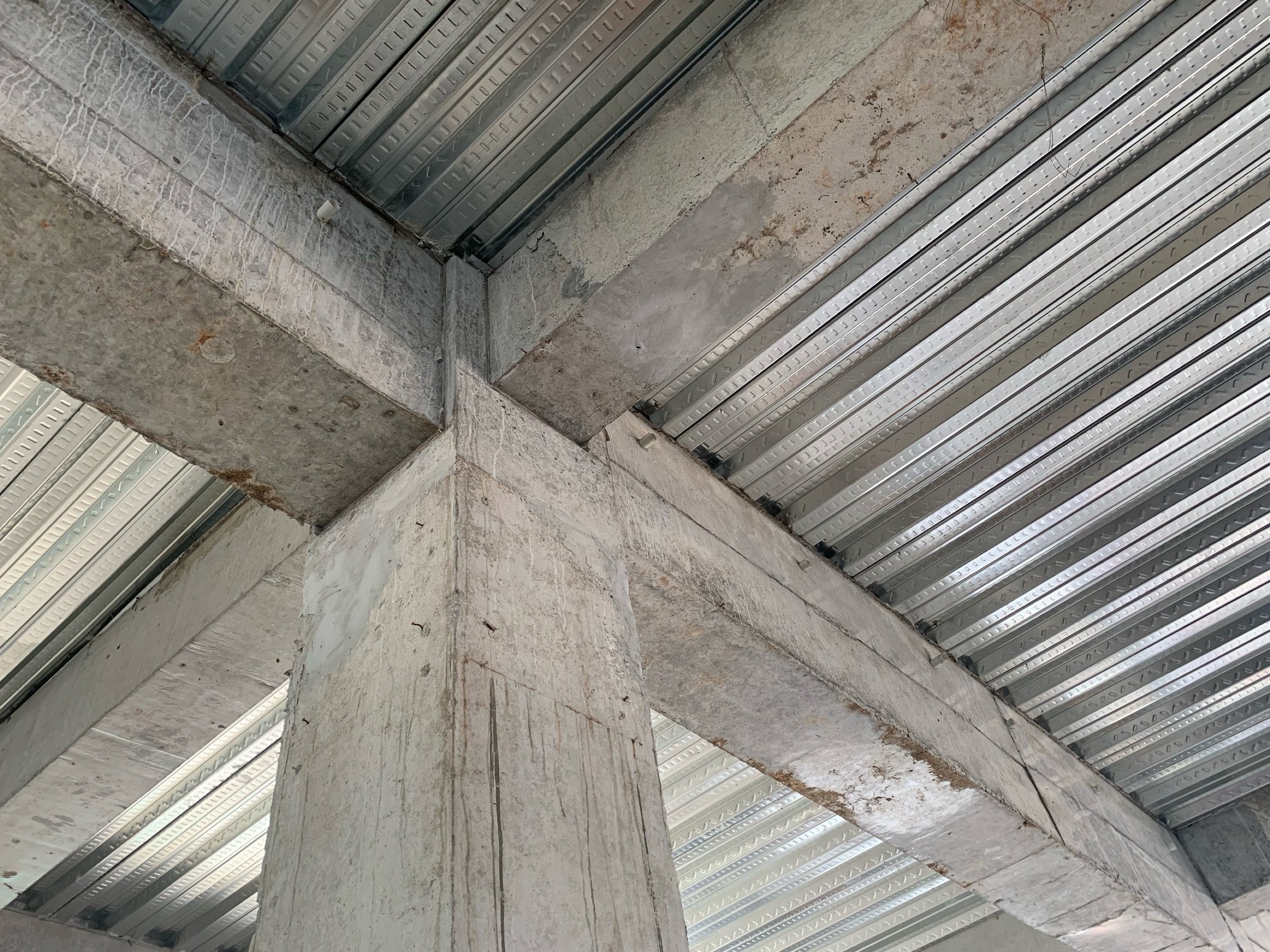
Study: Numerical investigation on performance of concrete-steel composite beams incorporating multi-transverse holes. Image Credit: Maher Zainul/Shutterstock.com
A new study published in Scientific Reports shows how internally embedded steel reinforcements can improve the strength and stability of reinforced concrete beams with service holes, reshaping how structural engineers approach design constraints in modern construction.
Integrating Services Without Compromising Structure
In today’s buildings, especially hospitals and commercial complexes, it's common to include transverse web openings in reinforced concrete (RC) beams. These openings allow essential systems, like HVAC, plumbing, and electrical conduits, to pass through the structure, helping reduce overall building height and improve space utilization.
But these design features come at a cost. By disrupting the load paths within a beam, web openings reduce shear strength and create stress concentrations, increasing the risk of cracks or localized failures. Traditional reinforcement methods often rely on external strengthening, but this new study explores an alternative: embedding steel reinforcements directly inside the concrete to offset these weaknesses.
Testing the Concept: From Lab to Simulation
To investigate the effectiveness of this internal reinforcement approach, researchers tested three beam types: a solid reference beam, an unreinforced beam with circular web openings, and a third beam with similar openings reinforced using a built-up steel I-section.
Each specimen was cast using Portland cement, crushed dolomite, river sand, and high-tensile steel rebars. After curing for 28 days, the concrete reached a compressive strength of about 25.8 MPa. The beams were then subjected to flexural loading using a hydraulic test frame, with load capacity and deflection monitored throughout.
To complement the lab tests, the team also developed a finite element model in ABAQUS. This simulation helped predict stress distribution, failure behavior, and overall performance, aligning closely with the experimental results and confirming the model’s accuracy.
What the Results Showed
The presence of web openings led to a noticeable reduction in shear capacity (about 14 % lower than that of the solid reference beam). Unreinforced beams with openings also showed over 40 % more deflection, suggesting greater ductility but also reduced stiffness.
However, once steel reinforcement was introduced, the picture changed. The reinforced beam, fitted with a built-up I-section (BI-W2.0), showed a 53.4 % increase in ultimate load capacity compared to the unreinforced version. This improvement came from the reinforcement forming a new load path, which helped transfer shear forces more effectively across the opening.
Cracking patterns also shifted. In unreinforced beams, cracks began around the edges of the web openings, where stress concentration was highest. With reinforcement, these stress points were better managed, reducing the severity of damage.
The researchers went a step further, analyzing how different dimensions of the I-section reinforcement affected performance.
- Web thickness played a significant role. A 2.0 mm thickness struck the best balance. Thicker options offered only marginal strength gains, suggesting diminishing returns.
- Flange width followed a similar pattern. Increasing the width improved shear capacity up to around 32 mm, beyond which further gains were minimal.
These insights are especially useful for optimizing material use without compromising performance - key for cost-effective design.
Why This Matters for Modern Construction
As service integration becomes a defining feature of contemporary architecture, engineers need solutions that preserve structural integrity without limiting design flexibility. This research offers a clear path forward.
Internally built steel reinforcements, especially I- and T-sections, don’t just restore lost capacity. They also enhance ductility, allowing structures to deform more before failing. This behavior is crucial in both new buildings and retrofits, helping meet safety codes while accommodating modern utility needs.
Looking Ahead
This study provides clear, data-backed evidence that internal steel reinforcements (specifically built-up I- and T-sections) effectively offset the structural weaknesses introduced by web openings in RC beams. By restoring shear capacity and refining failure behavior, these embedded elements not only recover lost strength but actively enhance beam performance under load.
The results support their use as a viable design solution in both new construction and retrofitting scenarios, especially where service integration is non-negotiable.
Looking ahead, further investigation should focus on optimizing reinforcement placement and evaluating performance under varied loading and support conditions. Just as critical is the development of design standards and code provisions that reflect these findings, enabling engineers to apply them with confidence and consistency across projects.
Journal Reference
Fayed, S., &. et al. 2026. Numerical investigation on performance of concrete-steel composite beams incorporating multi-transverse holes. Sci Rep 16, 792. DOI: 10.1038/s41598-025-32044-4, https://www.nature.com/articles/s41598-025-32044-4
Disclaimer: The views expressed here are those of the author expressed in their private capacity and do not necessarily represent the views of AZoM.com Limited T/A AZoNetwork the owner and operator of this website. This disclaimer forms part of the Terms and conditions of use of this website.