Researchers develop an optimized concrete blend using palm ash and jute fiber that cuts carbon emissions while increasing strength.
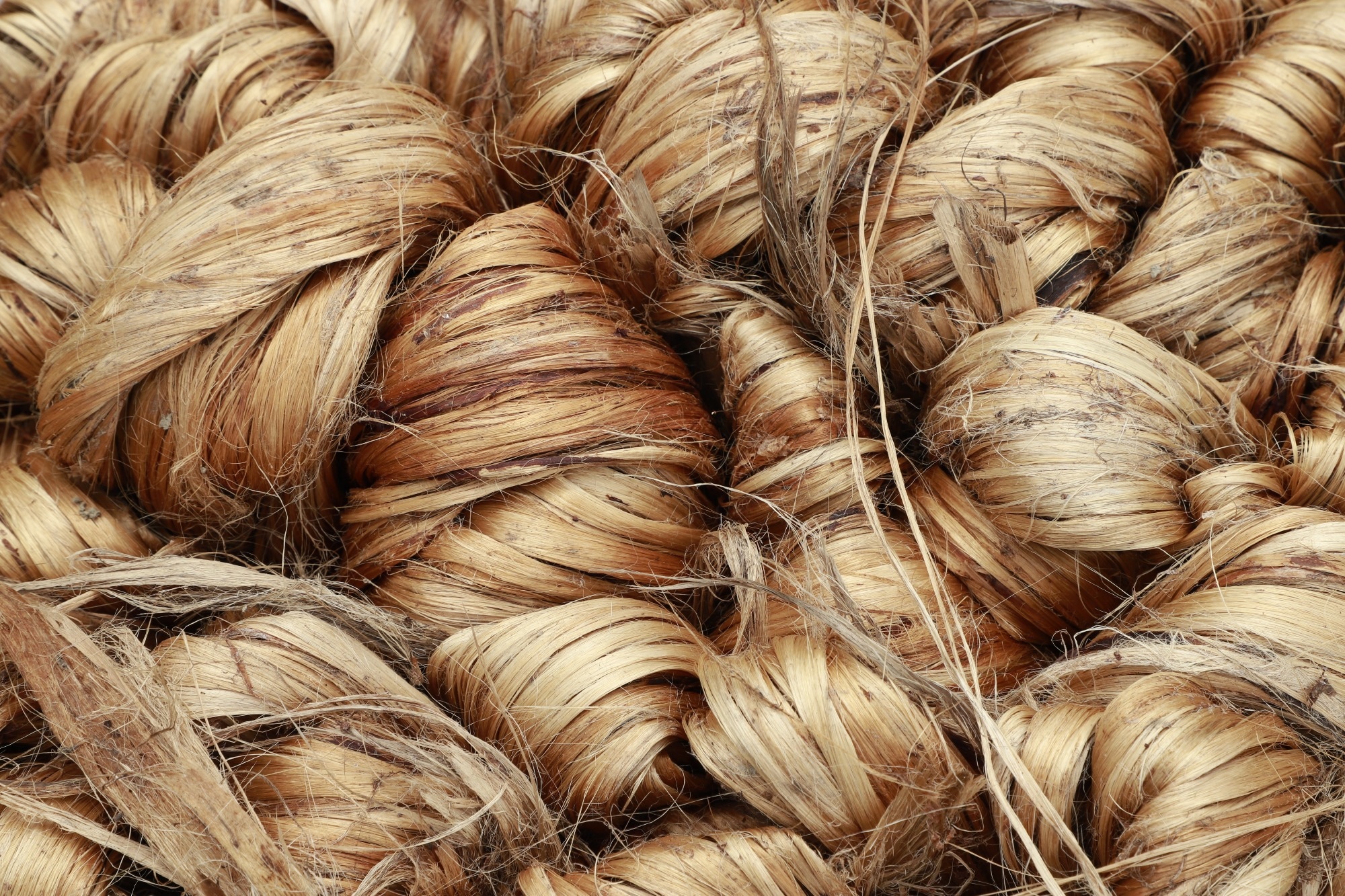
Study: Synergistic effects and optimization of palm oil fuel ash and jute fiber in sustainable concrete. Image Credit: Wirestock Creators/Shutterstock.com
A new study published in Scientific Reports introduces a high-performance concrete blend made with palm oil fuel ash (POFA) and jute fiber (JF), which reduces carbon emissions by nearly 20 % while improving compressive strength by 26 %. The research offers a practical, scalable solution for eco-friendly construction - especially in regions where these materials are locally available.
Rethinking Concrete for a Greener Future
Concrete production, particularly the use of Portland cement, is a major source of global carbon emissions, accounting for roughly 8% of total emissions. As the construction industry seeks more sustainable practices, the challenge lies in reducing concrete’s environmental footprint without compromising strength and durability.
This study takes on that challenge by combining two alternative materials: POFA, a cementitious by-product of palm oil production, and jute fiber, a natural, biodegradable reinforcement. Together, they form a composite that not only performs well structurally but also aligns with global sustainability goals.
Why Palm Ash and Jute Fiber?
POFA offers pozzolanic properties, meaning it can partially replace cement while enhancing long-term mechanical performance and lowering embodied carbon. Meanwhile, jute fiber contributes tensile strength and crack resistance, making it a promising reinforcement alternative to synthetic fibers.
Individually, these materials show benefits, but their combined effect has yet to be fully understood.
That’s where this research comes in. It examined how POFA and JF interact and how they can be optimized for both environmental and structural performance.
How the Research Was Conducted
To explore these interactions, researchers designed concrete mixes using POFA replacement levels from 0 % to 25 % and JF content from 0 % to 0.5 %. They applied Response Surface Methodology (RSM) using Design-Expert software to identify the most effective mix ratios.
Materials included ordinary Portland cement (OPC), micro silica, aggregates, and locally sourced POFA and jute fiber. The POFA was ground and sieved to a fine powder to ensure compatibility with cement. High-shear mixers were used to guarantee even distribution of materials.
The team measured key properties such as:
- Compressive strength, split tensile strength, flexural strength
- Modulus of elasticity (MoE) and ultrasonic pulse velocity (UPV)
- Embodied carbon for each mix
To capture the relationship between strength and sustainability, they also introduced a new metric: eco-strength efficiency (ESE), which looks at the ratio of compressive strength to embodied carbon.
Findings: Mechanical Performance and Environmental Impact
Among the various blends tested, the mix containing 10 % POFA and 0.1 % JF stood out for its mechanical performance:
- Compressive strength increased by 26 %
- Split tensile strength rose by 12.24 %
- Flexural strength improved by 12 %
Additional gains were seen in MoE and UPV, indicating a denser and more durable concrete matrix. However, the study also noted that performance declined at higher replacement levels due to fiber clumping, porosity, and weakened bonding within the matrix.
On the environmental side, a mix with 25 % POFA and no JF achieved the highest reduction in embodied carbon, 19.82 % lower than the control. But the most sustainable blend overall, factoring in both strength and emissions, was 15 % POFA with 0.25 % JF, which yielded a 38.22 % improvement in eco-strength efficiency.
Validating the Models
To ensure the reliability of their findings, the researchers validated all RSM predictions with experimental tests. The statistical models showed high accuracy, with R2 values ranging from 95.45 % to 99.83 %, and all predicted results were within 5 % of actual values.
While the 10 % POFA and 0.1 % JF mix delivered peak strength, a multi-objective optimization process identified a slightly adjusted blend (12.66 % POFA and 0.244 % JF) as the ideal balance across all metrics. This mix achieved an 86 % desirability score, confirming it as a strong candidate for practical application.
Real-World Potential and Industry Implications
These findings have practical relevance for the construction industry, particularly in areas with easy access to palm oil by-products and natural fibers. Using POFA helps cut cement demand and emissions, while JF offers a renewable, low-cost reinforcement option.
The optimized POFA-JF concrete can be used in a range of applications from residential construction and pavements to larger infrastructure projects. Its improved strength and durability support long-term structural integrity, while the use of waste materials and natural fibers contributes to circular economy goals.
This makes the approach especially attractive for developing regions, where cost-effective and sustainable materials are in high demand.
What Comes Next?
The research presents a compelling case for POFA and JF as complementary ingredients in sustainable concrete. However, the study also highlights areas for future refinement.
Assumptions in embodied carbon estimates, such as grinding energy and transport distances, suggest that life-cycle assessments could provide a more accurate picture.
Looking ahead, the authors recommend:
- Studying the microstructure of POFA-JF concrete to better understand hydration and bonding
- Evaluating long-term durability under various environmental conditions
- Conducting economic analyses to assess scalability and commercial feasibility
- Exploring other natural fibers or hybrid reinforcements for further optimization
Journal Reference
Umer, M., & et al. 2026. Synergistic effects and optimization of palm oil fuel ash and jute fiber in sustainable concrete. Sci Rep 16, 259. DOI: 10.1038/s41598-025-27579-5, https://www.nature.com/articles/s41598-025-27579-5
Disclaimer: The views expressed here are those of the author expressed in their private capacity and do not necessarily represent the views of AZoM.com Limited T/A AZoNetwork the owner and operator of this website. This disclaimer forms part of the Terms and conditions of use of this website.