Can greener concrete cost us long-term durability? New research uncovers how enforced carbonation improves CO2 capture but makes steel reinforcement more vulnerable to corrosion.
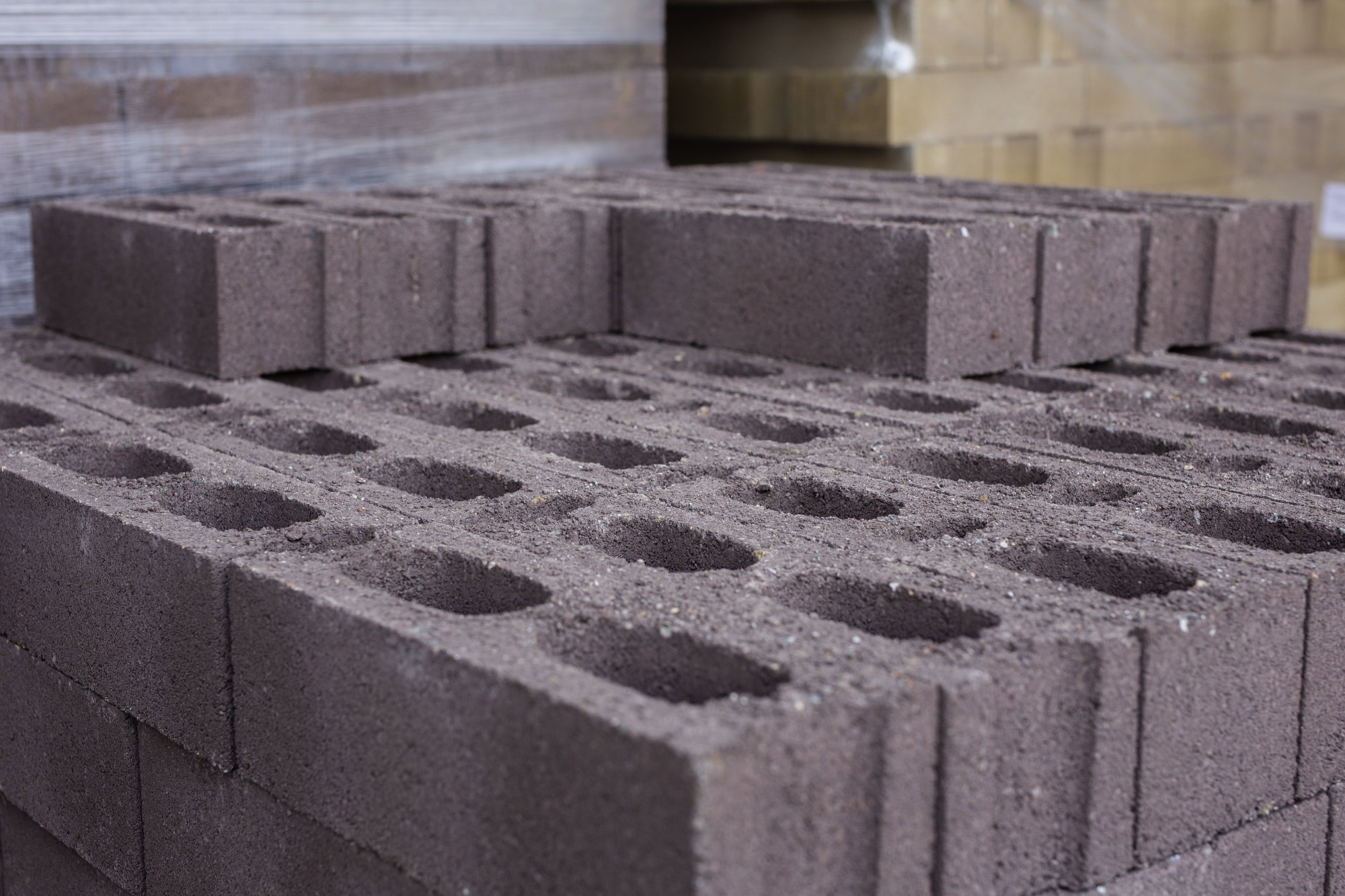
Study: The carbon sinking-corrosion dilemma in concrete: insights from early-age CSA-PC mortar. Image Credit: Remberto Nieves/Shutterstock.com
A recent study published in npj Materials Degradation raises a critical question for sustainable construction: can efforts to reduce concrete’s carbon footprint compromise its long-term durability?
Researchers found that while enforced carbonation can enhance performance and sequester carbon dioxide (CO2), it also increases the risk of steel reinforcement corrosion, posing a challenge for the structural integrity of greener concrete blends.
How Carbonation Works and Why it Matters
Carbonation is a natural process where CO2 reacts with calcium hydroxide in concrete to form calcium carbonate. This reaction densifies the concrete’s microstructure and can improve mechanical strength. At the same time, freshly cast concrete usually maintains a highly alkaline environment, which protects embedded steel reinforcement by forming a passive, anti-corrosive layer.
However, the picture becomes more complex with calcium sulfoaluminate-Portland cement (CSA-PC) mortars. These blends already exhibit lower alkalinity than traditional Portland cement. That means the protective layer around steel reinforcement is weaker from the outset, before carbonation even begins.
Introducing early-age enforced carbonation, where concrete is exposed to elevated CO2 concentrations under controlled conditions, can further reduce pH. Although this technique helps accelerate CO2 capture and enhance material properties, it also threatens to increase steel corrosion. This is a trade-off that, until now, has been insufficiently studied.
Study Design: Simulating Corrosive Conditions
To investigate this trade-off, researchers studied the corrosion behavior of steel bars embedded in CSA-PC mortars exposed to enforced carbonation at 4, 24, and 72 hours after mixing. The mortar mix included 75 % CSA and 25 % Portland cement, an increasingly popular blend for lower-carbon concrete.
Following initial curing, the samples underwent carbonation in a controlled CO2-rich environment. They were then immersed in a sodium chloride solution to simulate real-world exposure to aggressive, chloride-laden conditions like marine or de-icing environments.
Over the next 43 weeks, the research team monitored corrosion using electrochemical techniques such as open circuit potential (OCP), polarization resistance (PR), and corrosion current density (CCD). These methods provided detailed insight into the evolving corrosion behavior.
To supplement these measurements, multi-scale imaging tools, including X-ray computed tomography (XCT) and X-ray photoelectron spectroscopy (XPS), were used to observe changes in microstructure and corrosion product distribution.
What the Data Revealed: Corrosion Accelerates Quickly
The findings showed a clear pattern in that enforced carbonation sharply increased corrosion risk, especially within the first few hours. After just 4 hours of carbonation, the average corrosion cluster volume doubled from 0.5 mm3 to roughly 1 mm3. This acceleration was linked to the neutralization of the concrete’s already-low alkalinity, which led to steel depassivation and a corresponding spike in corrosion current density.
Interestingly, extending carbonation beyond four hours didn’t lead to significantly greater total corrosion volume. Instead, it changed the nature of the corrosion. Later-stage carbonation caused corrosion to spread more broadly but less deeply, which indicated a shift from localized attack to more uniform surface degradation.
Even so, the post-carbonation pH remained below the level needed to sustain passivation. This is notable because the starting pH of uncarbonated CSA-PC mortar was already near or below that threshold, underscoring the blend’s inherent vulnerability to corrosion.
XCT scans further revealed that corrosion products penetrated up to 2 mm into the mortar, showing how deeply the effects can reach, even when surface damage appears minimal.
Implications: Sustainability Comes With Trade-Offs
These results carry important implications for sustainable construction practices. On one hand, enforced carbonation can enhance concrete durability and help sequester CO2, contributing to lower overall emissions. On the other hand, if not properly managed, it may compromise steel integrity and reduce structural service life.
This makes the timing and control of carbonation exposure a key consideration.
In aggressive environments, especially those rich in chlorides, improperly applied carbonation could shorten the lifespan of reinforced structures. The study suggests that future guidelines for CSA-PC use should incorporate stricter controls over carbonation processes to ensure that carbon-capture gains don’t come at the cost of long-term durability.
Moreover, the findings highlight the need for protective strategies. These could include corrosion inhibitors, adjustments in binder chemistry to sustain higher alkalinity, or coatings that shield steel during carbonation treatment. Without such measures, the benefits of carbon sequestration could be undermined by corrosion-related failures.
It’s also worth noting that the study relied on small-scale laboratory samples. In real-world conditions, factors such as construction variability, environmental fluctuations, and larger structure sizes could introduce new variables that either amplify or mitigate the corrosion behavior observed here.
Final Takeaways and Next Steps
Ultimately, this study draws attention to the dual role of enforced carbonation in CSA-PC mortars. While it offers environmental benefits like CO2 sequestration and improved material performance, it also raises serious durability concerns, particularly when it comes to protecting steel reinforcement in low-alkaline systems.
The research underscores the importance of optimizing carbonation parameters and exploring alternative binders with better corrosion resistance. It also points to the value of steel-protection strategies that can maintain passivation under lower pH conditions.
Looking ahead, engineers and materials scientists will need to strike a balance between sustainability and structural reliability. Doing so will be critical for advancing low-carbon concrete solutions that are both eco-friendly and built to last.
Journal Reference
Qiang, Z., &. et al. (2025). The carbon sinking-corrosion dilemma in concrete: insights from early-age CSA-PC mortar. npj Mater Degrad. DOI: 10.1038/s41529-026-00737-4, https://www.nature.com/articles/s41529-026-00737-4
Disclaimer: The views expressed here are those of the author expressed in their private capacity and do not necessarily represent the views of AZoM.com Limited T/A AZoNetwork the owner and operator of this website. This disclaimer forms part of the Terms and conditions of use of this website.