By re-engineering natural clay and biochar, scientists created a phase-change material that stores more heat, leaks less, and survives extreme thermal cycling, pointing to a new path for low-cost, energy-saving buildings.
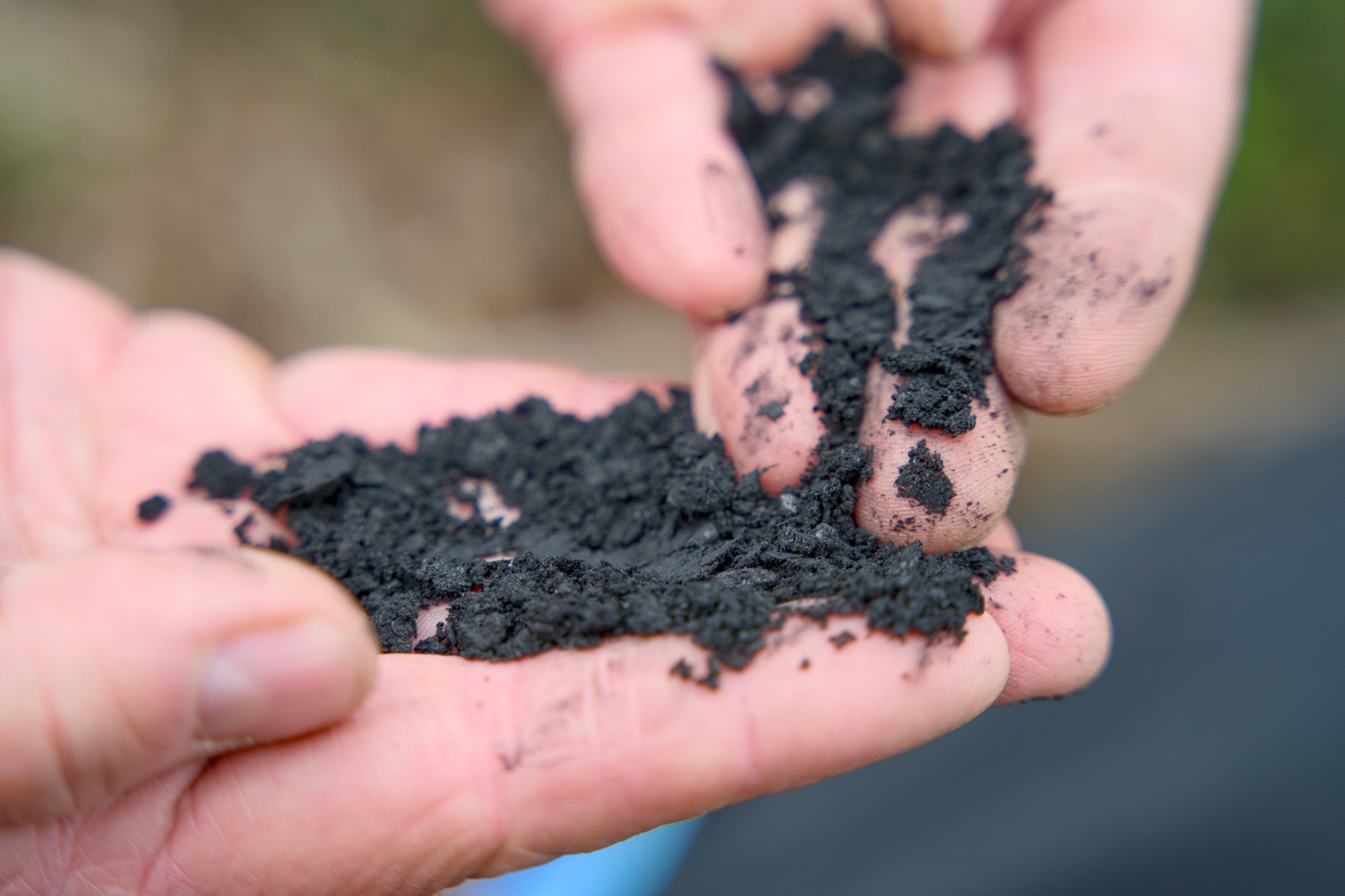
Study: Engineered mineral-doped biochar-infused paraffin for synergistic enthalpy storage and enhanced thermal management. Image Credit: Rene Notenbomer/Shutterstock.com
In a recent paper published in Biochar, scientists introduced a novel biomineral-based PCM using liquid paraffin (hexadecane, C16) infused into a biochar-mineral matrix. The process involves structural engineering with cetyltrimethylammonium bromide (CTAB), ultrasonication, and vacuum-assisted encapsulation.
Challenges With Conventional PCMs
Latent heat storage in PCMs plays a key role in thermal energy management, yet traditional PCMs face major limitations, particularly low energy conversion efficiency. Biochar, derived from the thermochemical conversion of biomass in an oxygen-limited environment, offers improved thermal stability and has been explored as a PCM carrier.
However, current biochar-PCM composites suffer from low encapsulation efficiency and limited energy storage capacity.
Montmorillonite (MT), a naturally abundant mineral clay with a microporous structure, is also promising due to its eco-friendliness and adsorption properties. But its poor shape stability and low PCM holding capacity restrict its effectiveness in thermal storage applications.
Combining MT with biochar could offer a synergistic solution, improving thermal properties while maintaining sustainability and cost-effectiveness.
The Study and Methodology
The research team aimed to create a hybrid composite with high thermal conductivity, enhanced storage capacity, and durability. They developed two types of biochar-clay materials: one using cationic nanoclay intercalated into biochar (engineered biomineral, or EMB) and another using a traditional, non-intercalated blend.
To produce the engineered composite:
- Spruce-derived biochar was thermally treated at 600 °C
- Montmorillonite was modified using CTAB and processed through ultrasonication and vacuum drying
- The treated mineral (EMT) and biochar were combined in a 1:3 weight ratio to form EMB
- This EMB was then infused with hexadecane (C16) via vacuum-assisted encapsulation
Control samples using only EMT or biochar with C16 were also prepared for comparison.
Key Findings
The engineered hybrid demonstrated substantial improvements over traditional materials:
- Surface Area: EMB showed a 516.4 % increase compared to raw MT
- Latent Heat: A 223.3 % improvement in energy storage was achieved
- Thermal Conductivity: Enhanced by 78 %
- Durability: Over 95.9 % of latent heat capacity retained after 1000 thermal cycles
- Leakage: Reduced to under 2.2 %, thanks to improved encapsulation and pore structure
The integration of modified nanoclay and biochar created a stable 3D matrix that not only improved crystallinity and heat transfer but also simplified the composite structure. Importantly, the material maintained high thermal stability between 120–160 °C without significant degradation.
However, researchers also highlighted a potential obstacle: the use of surfactants like CTAB may introduce wastewater challenges at scale. Future work may explore biodegradable or renewable surfactants and closed-loop systems to enhance environmental sustainability.
Conclusion
This study demonstrates a practical, environmentally friendly approach to engineering high-performance phase-change materials for thermal regulation, especially in buildings seeking to reduce energy consumption. The hybrid biochar-clay PCM offers a compelling balance of efficiency, stability, and cost.
Journal Reference
Atinafu, D. G., Nam, J., & Kim, S. (2026). Engineered mineral-doped biochar-infused paraffin for synergistic enthalpy storage and enhanced thermal management. Biochar, 8(1), 6. DOI: 10.1007/s42773-025-00517-4, https://link.springer.com/article/10.1007/s42773-025-00517-4
Disclaimer: The views expressed here are those of the author expressed in their private capacity and do not necessarily represent the views of AZoM.com Limited T/A AZoNetwork the owner and operator of this website. This disclaimer forms part of the Terms and conditions of use of this website.