A validated experimental–numerical study shows how engineered cementitious composite shells can shift failure modes, boost ductility, and deliver strength gains of up to 152 %, offering a data-driven pathway to safer earthquake-resistant structures.
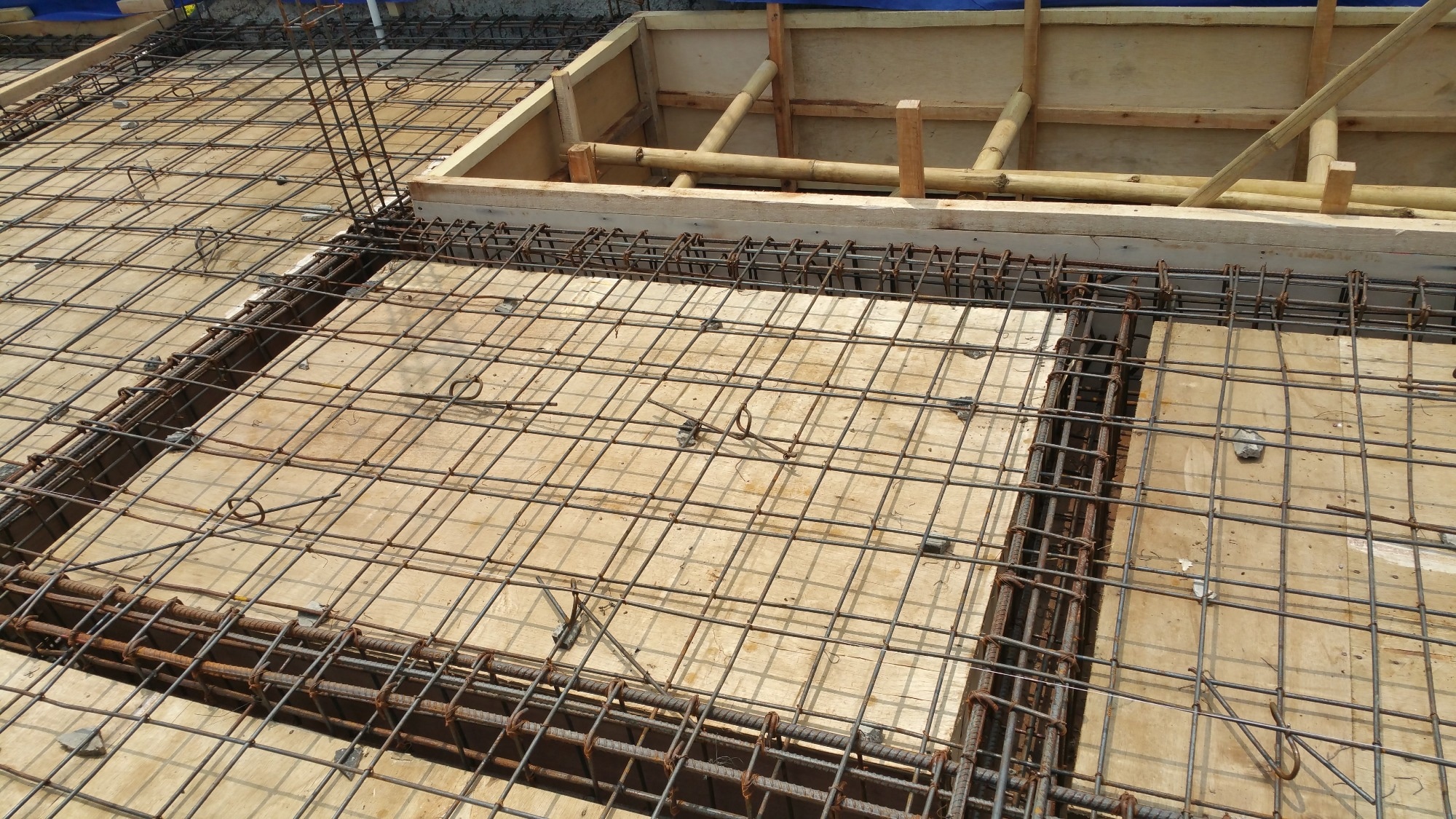
Study: Seismic performance of reinforced concrete beam column joints strengthened with ECC shells. Image Credit: Hiraarge/Shutterstock.com
A recent study published in Scientific Reports examined the seismic performance of reinforced concrete (RC) beam-column joints strengthened with engineered cementitious composite (ECC) shells in detail.
Conventional RC joints often experience brittle failures during earthquakes, leading to severe structural damage. To address this vulnerability, researchers evaluated ECC shells as both a retrofitting and strengthening strategy. Their findings highlight clear gains in strength, ductility, and overall seismic capacity.
The Role of ECC in Structural Reinforcement
The use of ECC in structural reinforcement marks an important step forward for civil engineering materials. ECC is a high-performance, fiber-reinforced composite known for its strain-hardening behavior under tension, with tensile strain capacities typically in the 3–5 % range (roughly 300 times that of ordinary concrete).
Unlike conventional concrete, it can sustain numerous fine cracks under load, usually with widths below 100 μm, while maintaining its ability to carry force.This combination of ductility, controlled cracking, and sustained load capacity enhances energy dissipation during seismic events.
ECC's multi-crack behavior and self-healing tendencies also support durability under repeated loading. When used as a shell around RC joints, ECC improves tensile resistance, delays crack propagation, and builds in additional deformation capacity. These characteristics make it especially valuable for performance-based seismic design.
Methodology: Evaluating ECC-Strengthened Joints
The research focused on the seismic response of beam-column joints strengthened with ECC shells (BCJES). To ensure numerical reliability, the team developed a refined finite element (FE) model validated against cyclic tests conducted on two full-scale specimens: one conventional RC control joint and one joint strengthened with a 150 mm ECC shell.
Both specimens were subjected to reversed cyclic loading. After confirming that the FE model accurately represented nonlinear concrete behavior, steel reinforcement response, and ECC characteristics, researchers expanded the analysis through a broad parametric study. They examined the influence of ECC shell height, shell thickness, longitudinal reinforcement ratio, and axial compression ratio.
The FE model enabled detailed observation of stress flow, crack evolution, and the interaction between ECC shells, core concrete, and reinforcement, offering insight into the mechanisms driving improved performance.
Performance Improvements and Implications
Strengthened joints demonstrated clear gains in load capacity, ductility, and energy dissipation compared to the conventional specimen.
One of the most influential factors was the longitudinal reinforcement ratio. Increasing it from 0.05 % to 0.2 % raised peak load from 33.87 kN to 85.58 kN, That is a 152 % increase. Multiple linear regression confirmed this variable as the primary driver of ultimate bearing capacity, followed by ECC shell thickness, axial compression ratio, and shell height.
Shell thickness also played a role. Raising the thickness from 30 mm to 90 mm improved the peak load by 11.9 %, but increasing it to 150 mm yielded only an additional 2.46 % gain, revealing a point where added material no longer provides proportional benefit. This highlights the need for thoughtful material optimization.
ECC shell height influenced performance in a different way. Increasing height from 300 mm to 1800 mm produced only a 1.76 % rise in peak load, but significantly enhanced yield and ultimate displacement, showing that height contributes more to ductility than strength.
The axial compression ratio exhibited nonlinear effects: while higher ratios increased initial stiffness, excessive compression reduced ductility. Once the ratio exceeded 0.3, ultimate displacement dropped sharply, with a 21.24 % reduction observed at 0.5. The study suggests an optimal value near 0.3 for balancing stiffness and deformation capacity.
Across all tests, ECC shells delayed crack propagation, improved stress distribution, and reduced crack widths thanks to the material’s strain-hardening response. These benefits also protected reinforcement bars from damage.
The predictive model developed through regression achieved an R2 value of 0.943, with low multicollinearity (VIF < 5) and a Durbin–Watson statistic of 2.146, supporting its reliability. In addition, a theoretical shear capacity model accounting for primary shear resistance and diagonal bracing mechanisms aligned closely with experimental and FE results, with maximum deviations of 7.5 % and 7.9 %.
Overall, the findings show that well-designed ECC shells and reinforcement schemes can significantly enhance seismic resilience without unnecessary material use.
Applications: Transforming Seismic Design and Retrofitting
This research carries implications for both new construction and retrofitting. For existing buildings, particularly older RC structures built before modern seismic codes, ECC shells offer a practical strengthening solution. For new buildings, incorporating ECC components supports performance-based design by providing controlled, ductile failure modes and improved energy dissipation.
The study’s predictive tools can help engineers fine-tune ECC shell dimensions and reinforcement ratios to meet specific seismic demands, allowing for more calibrated design decisions.
Future Directions: Ensuring Long-Term Durability
This study offers valuable evidence that ECC shells can significantly enhance the seismic behavior of RC beam-column joints, improving load-bearing capacity, ductility, and energy dissipation. It also underscores the importance of optimizing key design parameters to achieve strong performance without excessive material use.
Because many of the broader insights are grounded in validated FE simulations, future work should expand experimental testing across a wider range of loading patterns and boundary conditions. Investigating long-term durability under environmental exposure and repeated seismic events will also be important for broader adoption.
Together, these findings support the ongoing development of RC systems that are safer, more durable, and better suited to withstand seismic hazards.
Journal Reference
Xiao, Z., Wang, L. & Huang, R. (2026). Seismic performance of reinforced concrete beam column joints strengthened with ECC shells. Sci Rep. DOI: 10.1038/s41598-026-39753-4, https://www.nature.com/articles/s41598-026-39753-4
Disclaimer: The views expressed here are those of the author expressed in their private capacity and do not necessarily represent the views of AZoM.com Limited T/A AZoNetwork the owner and operator of this website. This disclaimer forms part of the Terms and conditions of use of this website.