A new experimental study reports that strategically placed 2.5 mm near-surface-mounted steel wires can increase the shear capacity of reinforced concrete deep beams by more than 60 %.
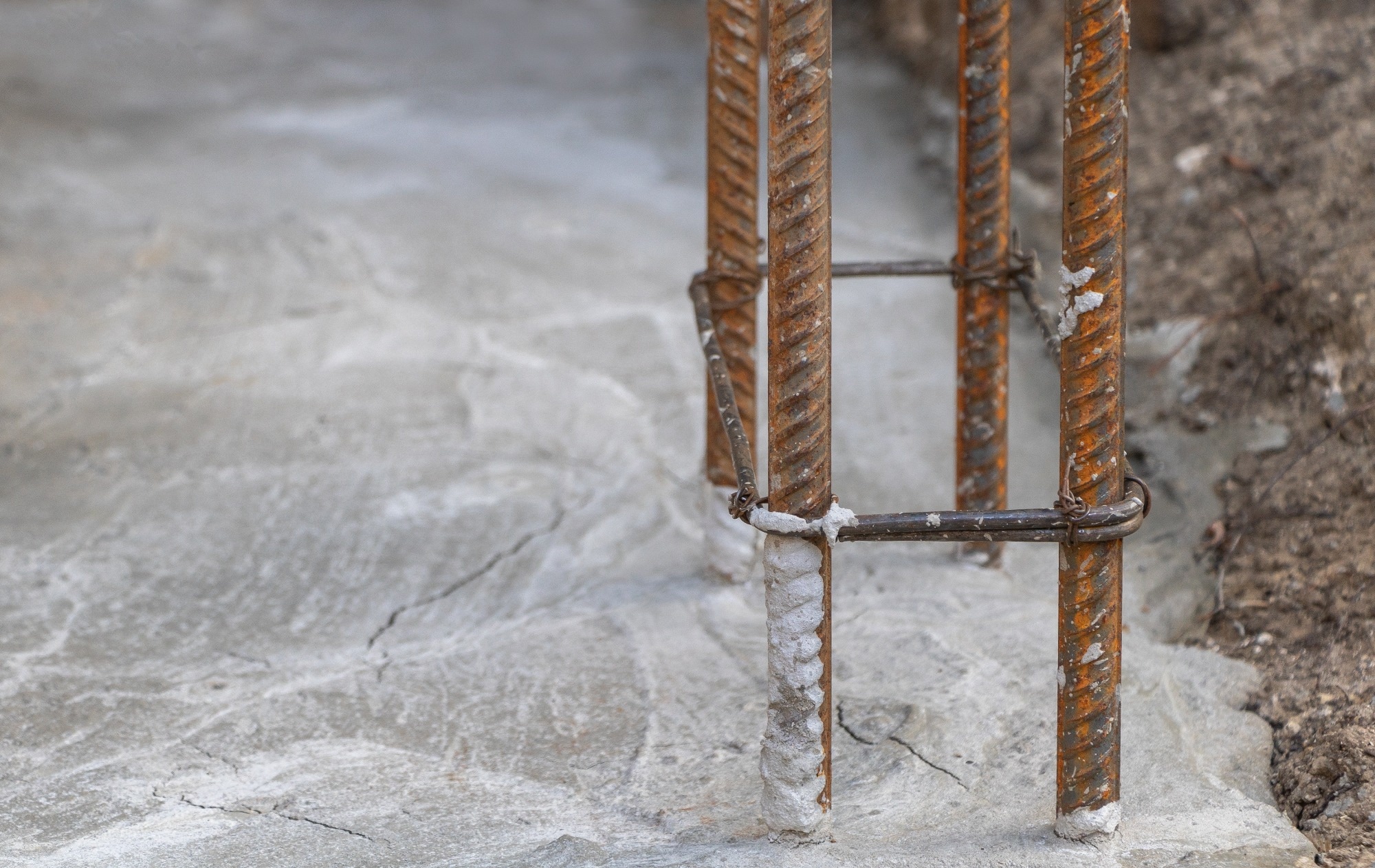
Study: Enhancing the shear strength of reinforced concrete deep beams using thin-diameter near-surface mounted steel wires: an experimental study. Image Credit: Gheorghe Mindru/Shutterstock.com
Published in Scientific Reports, the research evaluates how these thin NSM steel wires stabilize compression struts, improve crack control, and enhance overall structural response, offering a practical solution for strengthening shear-critical RC deep beams.
Reinforcement Techniques for Enhanced Shear Strength
As infrastructure systems carry heavier loads and face longer service demands, improving shear capacity has become increasingly important. Conventional approaches such as increasing concrete strength or adding more transverse reinforcement (stirrups) can be helpful to an extent, but their effectiveness often plateaus under high shear stresses.
This has led engineers to explore alternatives, including fiber-reinforced polymers (FRPs) and near-surface-mounted (NSM) reinforcement systems.
The NSM technique embeds reinforcement within shallow grooves cut into the concrete cover, improving stress transfer while reducing exposure-related durability concerns and debonding risks.
In this study, the research team focused on thin-diameter steel wires used specifically for shear strengthening of RC deep beams, particularly in disturbed regions (D-regions), where load transfer follows strut-and-tie action rather than conventional beam theory.
Experimental Program and Test Setup
To evaluate performance, the researchers tested eleven RC deep beam specimens under three-point loading. Four NSM layouts were examined (vertical, horizontal, diagonal, and mesh), allowing for direct comparison of how reinforcement orientation influences shear behavior.
Key parameters included shear capacity, cracking patterns, stiffness, deflection response, energy absorption, and failure modes.
All beams were cast with a concrete mix designed to reach a compressive strength of 40 MPa at 28 days. High-tensile longitudinal reinforcement resisted flexural stresses, while mild steel stirrups provided baseline shear reinforcement in one half of each beam. The NSM wires were installed in pre-cut grooves and bonded using a high-strength, non-shrinking epoxy adhesive to ensure effective stress transfer.
An asymmetric reinforcement scheme was adopted to isolate shear effects. Strengthening was applied only to the stirrup-free shear span, intentionally inducing shear-dominant failure in that region. This approach made it possible to attribute performance differences directly to the NSM configurations.
Performance of Different NSM Configurations
All strengthened specimens showed measurable improvements in shear capacity, stiffness, and energy absorption. However, the degree of improvement depended strongly on wire orientation.
Diagonal reinforcement delivered the most significant gains. A specimen reinforced with eleven diagonal wires achieved a 61.8 % increase in ultimate shear load and a 171.3 % increase in energy absorption compared to the control beam. By intersecting diagonal shear cracks and aligning with internal force trajectories, the wires stabilized the compression strut and shifted failure away from the strengthened span.
Vertical reinforcement also enhanced shear capacity, producing a 50 % increase in ultimate load. However, this configuration reduced ductility, with ultimate deflection decreasing by up to 30.8 %. While stiffness and crack control improved, the post-peak response became more abrupt, highlighting a clear strength–ductility trade-off.
Horizontal reinforcement yielded more modest results, increasing shear capacity by up to 34.1 %. Because the wires ran parallel to the principal compression strut, their contribution to restraining diagonal cracking was limited.
The mesh configuration, combining vertical and horizontal wires, provided a balanced response. It achieved a 59.1 % increase in shear capacity and a 113.4 % improvement in energy absorption. This layout confined the compression strut from multiple directions, improved crack distribution, and produced the largest stiffness increase (approximately 138.8 % over the control specimen).
Overall, reinforcement that follows the natural flow of forces within deep beams, especially when arranged diagonally, proved to be the most efficient solution.
Practical Implications for Retrofitting
The findings highlight the potential of thin-diameter NSM steel wires as a practical strengthening option for existing RC deep beams. Because installation requires only shallow surface grooves, the method is minimally invasive and well-suited for retrofitting aging infrastructure where extensive demolition is not feasible.
Its flexibility in layout allows engineers to tailor strengthening schemes to specific structural demands, balancing strength, stiffness, ductility, and cost. The small diameter of the wires also simplifies installation compared to larger NSM bars, reducing the need for intervention in existing members.
Future Directions: Enhancing NSM System Applications
While the strength and stiffness gains are substantial, the observed reduction in deformation capacity in some configurations underscores the need for balanced design. Enhancing load resistance must be carefully coordinated with ductility requirements, particularly in safety-critical applications.
Future studies should examine long-term durability under environmental exposure, cyclic and fatigue loading behavior, and performance across different beam geometries. Additional research on bond characteristics and potential wire slip mechanisms could further improve anchorage reliability and system performance.
As demands on concrete structures continue to grow, efficient and adaptable strengthening strategies will remain central to structural rehabilitation practice.
Journal Reference
Elkafrawy, M., Altobgy, M.A. & Fayed, S. (2026). Enhancing the shear strength of reinforced concrete deep beams using thin-diameter near-surface mounted steel wires: an experimental study. Sci Rep 16, 7186. DOI: 10.1038/s41598-026-37355-8, https://www.nature.com/articles/s41598-026-37355-8
Disclaimer: The views expressed here are those of the author expressed in their private capacity and do not necessarily represent the views of AZoM.com Limited T/A AZoNetwork the owner and operator of this website. This disclaimer forms part of the Terms and conditions of use of this website.