As sustainable building materials surge in popularity, researchers warn that not all bio-based insulation performs the same, and that without rigorous testing and moisture control, mold risk could undermine long-term durability.
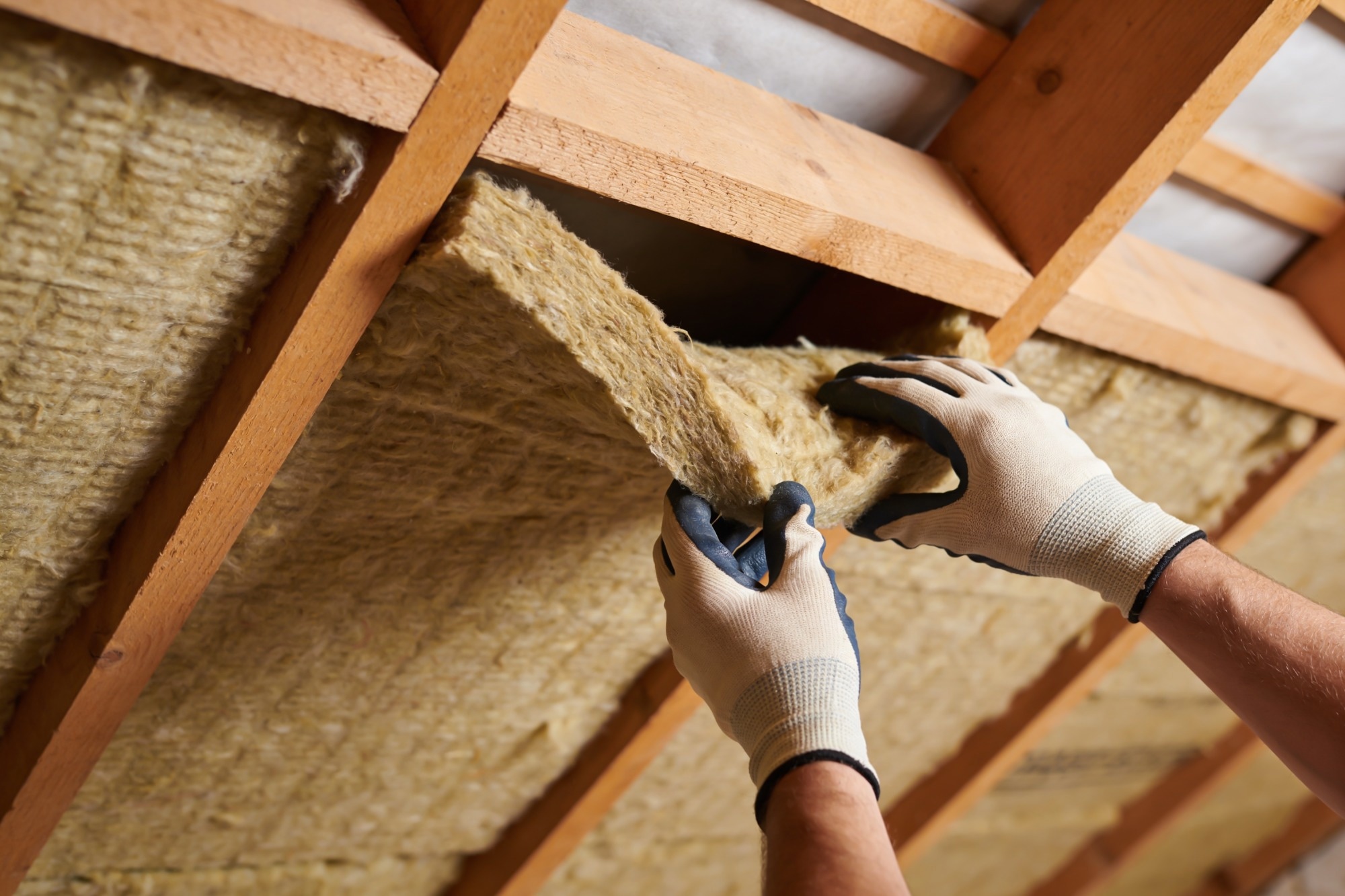
Study: Mold susceptibility of bio-based insulation materials in modern construction. Image Credit: Snide12/Shutterstock.com
The construction industry is increasingly adopting bio-based insulation materials as sustainable alternatives to conventional options. Yet as uptake grows, so does scrutiny.
A recent study published in npj Materials Degradation reviewed experimental research on the mold susceptibility of these materials - an issue that sits at the intersection of durability, indoor air quality, and long-term building performance.
The Rise of Sustainable Insulation Solutions
Bio-based insulation materials, including hemp, straw, cork, and mycelium, are emerging as alternatives to conventional options like expanded polystyrene (EPS) and polyurethane foams (PUR). Derived from renewable resources, they typically offer lower embodied energy and align with circular economy principles, while still delivering competitive thermal insulation.
This shift is not happening in isolation. As the construction sector faces mounting pressure to reduce carbon emissions, bio-based insulation is gaining attention for its environmental advantages, from reduced lifecycle impacts to the potential for improved indoor air quality.
However, sustainability credentials alone do not guarantee long-term performance.
Durability, particularly resistance to mold growth, remains a critical consideration. mold can degrade materials over time and pose health risks to occupants, especially under sustained or fluctuating moisture conditions.
These concerns frame the central question of the review: how do bio-based insulation materials actually perform when exposed to mold-promoting environments?
Assessing Mold Resistance in Laboratory Settings
To answer this, the authors did not conduct new experiments. Instead, they carried out a comprehensive review of existing laboratory studies and testing standards that evaluate mold susceptibility in bio-based insulation, alongside a broader literature analysis. This approach allowed them to compare findings across materials, methodologies, and environmental conditions.
In the studies reviewed, researchers simulated real-world exposure by carefully controlling relative humidity (RH) and temperature. Samples of hempcrete, straw, and cork were frequently inoculated with common indoor mold species such as Aspergillus, Penicillium, and Stachybotrys, which are linked to respiratory issues and allergic reactions.
Performance was then assessed against conventional insulation materials, including EPS and PUR. By placing bio-based and synthetic products side by side, the review not only highlighted differences in susceptibility but also exposed inconsistencies in how mold resistance is evaluated. A key issue is the absence of standardized testing protocols, which makes reliable comparison across products difficult.
Variability in Mold Growth Among Insulation Materials
A consistent theme across the literature was variability. Bio-based insulation did not perform uniformly; resistance depended heavily on composition, density, treatment, and environmental exposure. Differences appeared not only between categories such as straw versus cork, but also between individual products within the same category.
Materials with higher cellulose content, including straw- and hemp-based insulation, showed significant mold growth when exposed to humidity levels approaching or exceeding approximately 75–80 %, depending on the mold species and material characteristics. This aligns with established thresholds for fungal development.
By comparison, synthetic and mineral-based materials such as EPS, PUR, mineral wool, and glass wool generally demonstrated lower susceptibility, largely due to their hydrophobic and inorganic properties. However, the review cautions against broad assumptions. mold resistance cannot be inferred solely from material type; product-specific testing remains essential.
Most common indoor mold species require a minimum water activity (Aw) of around 0.80–0.85 to initiate growth, although some can develop at slightly lower levels. In practical terms, this means that even modest moisture accumulation may be sufficient to trigger colonization.
This is where the inherent properties of bio-based materials become particularly relevant. Their hygroscopic nature enables them to absorb and release moisture, which can support thermal buffering. At the same time, if ventilation and detailing are inadequate, that same moisture-buffering capacity may create favourable conditions for fungal growth. Performance, therefore, depends as much on context as on composition.
Applications: Ensuring Effective Moisture Management
These findings reinforce a clear message that sustainable material selection must be paired with sound building physics. Understanding mold susceptibility is essential if bio-based insulation is to be used safely and effectively in residential and commercial construction.
Moisture control strategies, careful detailing, and appropriate installation practices are central to mitigating risk.
Simply specifying a bio-based product is not enough; its suitability must be evaluated in relation to climate, occupancy patterns, and envelope design.
The review also calls attention to systemic issues within testing and product reporting. Many mold susceptibility assessments do not adequately replicate the complexity of real-world conditions, potentially leading to misleading conclusions about performance.
Predictive mold-growth models used in building physics, such as isopleth systems and mold index models, were also examined. These tools often rely on broad material classifications and, without robust experimental calibration, may overestimate growth under fluctuating environmental conditions.
An analysis of 164 commercial insulation product data sheets revealed further gaps in transparency. Only 45 % explicitly mentioned mold resistance, and fewer than 20 % cited a recognized testing standard. This inconsistency suggests that performance communication across the sector remains uneven, complicating informed material selection.
Future Directions: Enhancing Resilience Against Mold
Overall, the study offers a detailed assessment of mold susceptibility in bio-based insulation and its implications for sustainable construction. It underscores the importance of reliable, standardized testing protocols that reflect real-world exposure and enable meaningful product comparisons.
Future work should concentrate on improving long-term durability and clarifying resistance mechanisms. This includes developing antifungal treatments, enhancing the intrinsic resilience of bio-based materials, refining predictive models through improved substrate classification and calibration, and advancing in-situ monitoring approaches. Strengthening standardized test methods that better capture actual environmental variability will be particularly important.
By integrating these insights into design and specification practices, the construction sector can continue to reduce environmental impact without compromising durability or occupant health.
Journal Reference
Wildman, J., & et al. (2026). Mold susceptibility of bio-based insulation materials in modern construction. npj Mater Degrad 10, 29. DOI: 10.1038/s41529-026-00742-7, https://www.nature.com/articles/s41529-026-00742-7
Disclaimer: The views expressed here are those of the author expressed in their private capacity and do not necessarily represent the views of AZoM.com Limited T/A AZoNetwork the owner and operator of this website. This disclaimer forms part of the Terms and conditions of use of this website.