Researchers are continuing to look at whether industrial waste and demolition debris can be reused in concrete without undermining performance.
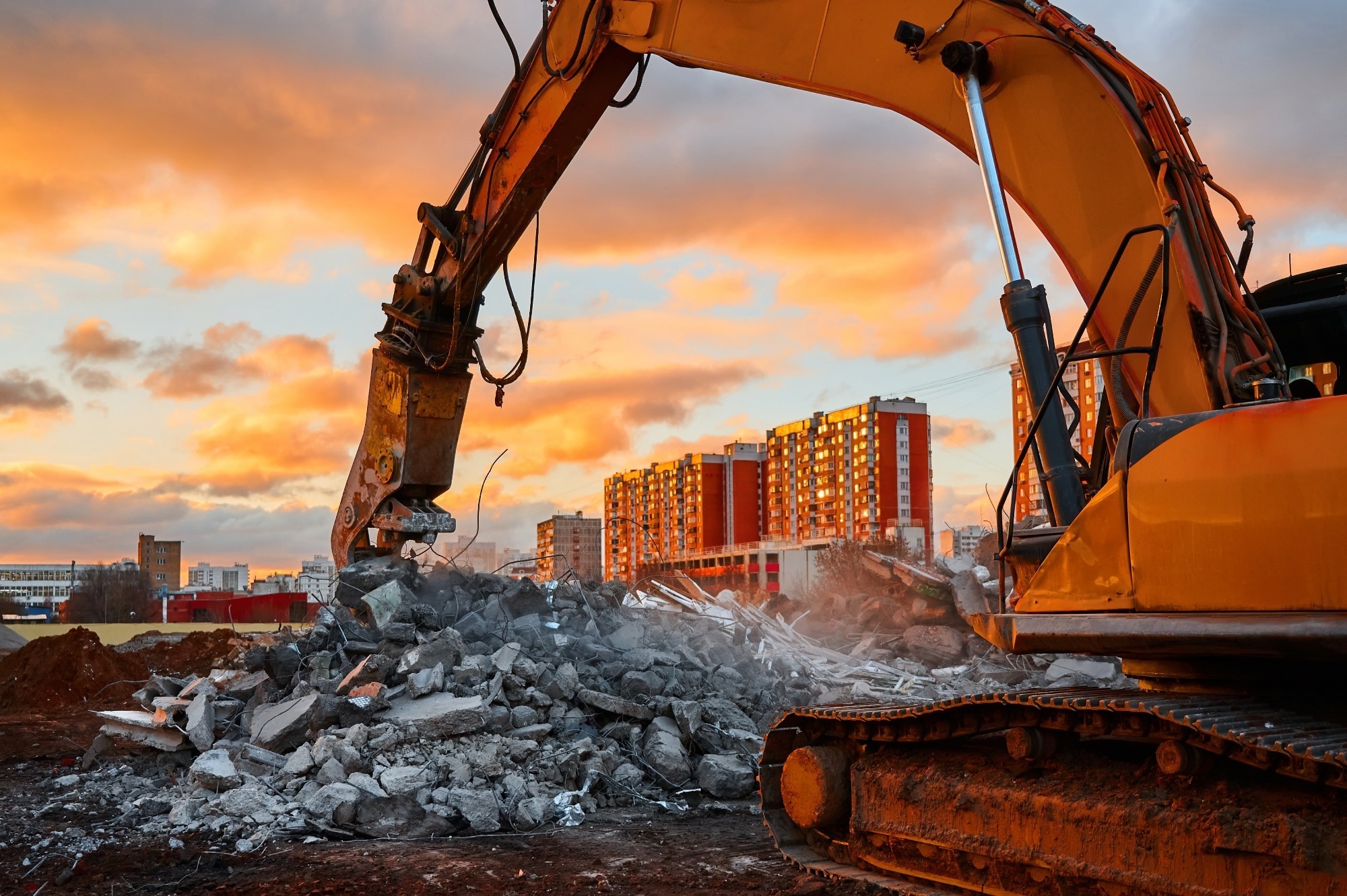 Study: Recycling and Sustainability of Cement-Based Materials: Properties, Applications and Challenges. Image Credit: Nordroden/Shutterstock.com
Published in Materials , a new review brings together eight papers to assess recent work on how these recycled materials perform, where they could be used, and what still needs to be addressed before wider uptake.
Cement-based materials are widely used in construction, but they also consume large amounts of energy and raw materials. That has helped drive interest in using waste products to reduce environmental impact and conserve resources.
Saving this for later? Download a PDF here.
Recycled Aggregates Need Careful Treatment
One focus is construction and demolition waste, which the editorial says contains approximately 70 % concrete and brick waste. That material can be processed into recycled coarse aggregate and used in recycled aggregate concrete instead of natural coarse aggregate.
The potential benefits are familiar: lower costs, less waste, and reduced demand for natural resources. But the editorial also makes clear that recycled aggregate is not consistent in quality. Differences in composition and physical properties can affect strength and impermeability.
One of the studies discussed compared recycled aggregate concrete made from different demolition sources, including mixed demolition waste, pure concrete demolition, precast products, and reinforced pool.
It found that even in instances where the recycled aggregate did not meet the required standards, the finished concrete could still meet compressive strength and water-resistance requirements when the water-binder ratio was adjusted and additives such as superplasticizers were used.
Researchers are also testing ways to improve recycled aggregate before use. One of those methods is carbonation treatment with carbon dioxide, which can improve the aggregate while also fixing carbon dioxide.
The review says a completely dry initial moisture condition is most suitable for this process. It also notes that recycled aggregate taken from very low-strength or very high-strength original concrete showed lower carbonation efficiency. In low-strength concrete, that was linked to a lack of carbonatable phases. In high-strength concrete, the issue was limited carbon dioxide penetration.
Particle size also affected the results. For recycled aggregate from high-strength concrete, smaller particles showed higher carbonation efficiency. For recycled aggregate from low-strength concrete, larger particles showed a stronger carbonation effect.
Under completely dry conditions, carbonated recycled aggregate with a particle size of 10-20 mm showed the best physical properties. Concrete made with that material performed better than ordinary recycled aggregate concrete in workability, compressive strength, and chloride penetration resistance.
Waste Materials Being Used In Higher-Performance Concrete
The review also examines work on high-performance and ultra-high-performance concrete.
One study found that adding 0-40 % manganese slag to ultra-high-performance concrete improved early mechanical properties and densification, while also helping to solidify toxic substances. Another found that manganese slag helped refine the cementitious matrix, while basalt fibers helped limit crack growth. Those effects improved the resistance of high-performance concrete to salt erosion.
The editorial also points to work on basalt fibers and calcium sulfate whiskers made from waste gypsum. In that study, the combination improved compressive strength and dynamic elastic modulus. The improvement was linked to changes in pore structure, including lower proportions of large and capillary pores and a higher fraction of transition pores.
Durability Remains an Issue
The editorial ends by arguing that work in this area is likely to keep moving quickly, but says a more detailed study is still needed.
Among the areas it highlights are multi-component blends of industrial waste, long-term natural diffusion tests, and in-site service monitoring under real environmental conditions. It also points to open questions around chloride transport, sulfate transport, and chloride threshold content in reinforced concrete structures.
The authors also call for a fuller life-cycle evaluation system for cement-based materials containing industrial waste. That would include not only mechanical performance, but also resource use, energy demand, environmental impact, and cost.
Alongside that, the editorial says future research is likely to include new recycled and sustainable materials that are low-cost, high-performing, and adaptable, as well as materials with green, intelligent, self-detection, and self-healing characteristics.
Journal Reference
Wang, Y., Wu, L. (2026). Recycling and Sustainability of Cement-Based Materials: Properties, Applications and Challenges. Materials, 19(7), 1281. DOI: 10.3390/ma19071281, https://www.mdpi.com/1996-1944/19/7/1281
Disclaimer: The views expressed here are those of the author expressed in their private capacity and do not necessarily represent the views of AZoM.com Limited T/A AZoNetwork the owner and operator of this website. This disclaimer forms part of the Terms and conditions of use of this website.