Steel corrosion remains the primary cause of premature concrete failure, but a new approach using CO2 may be changing that equation.
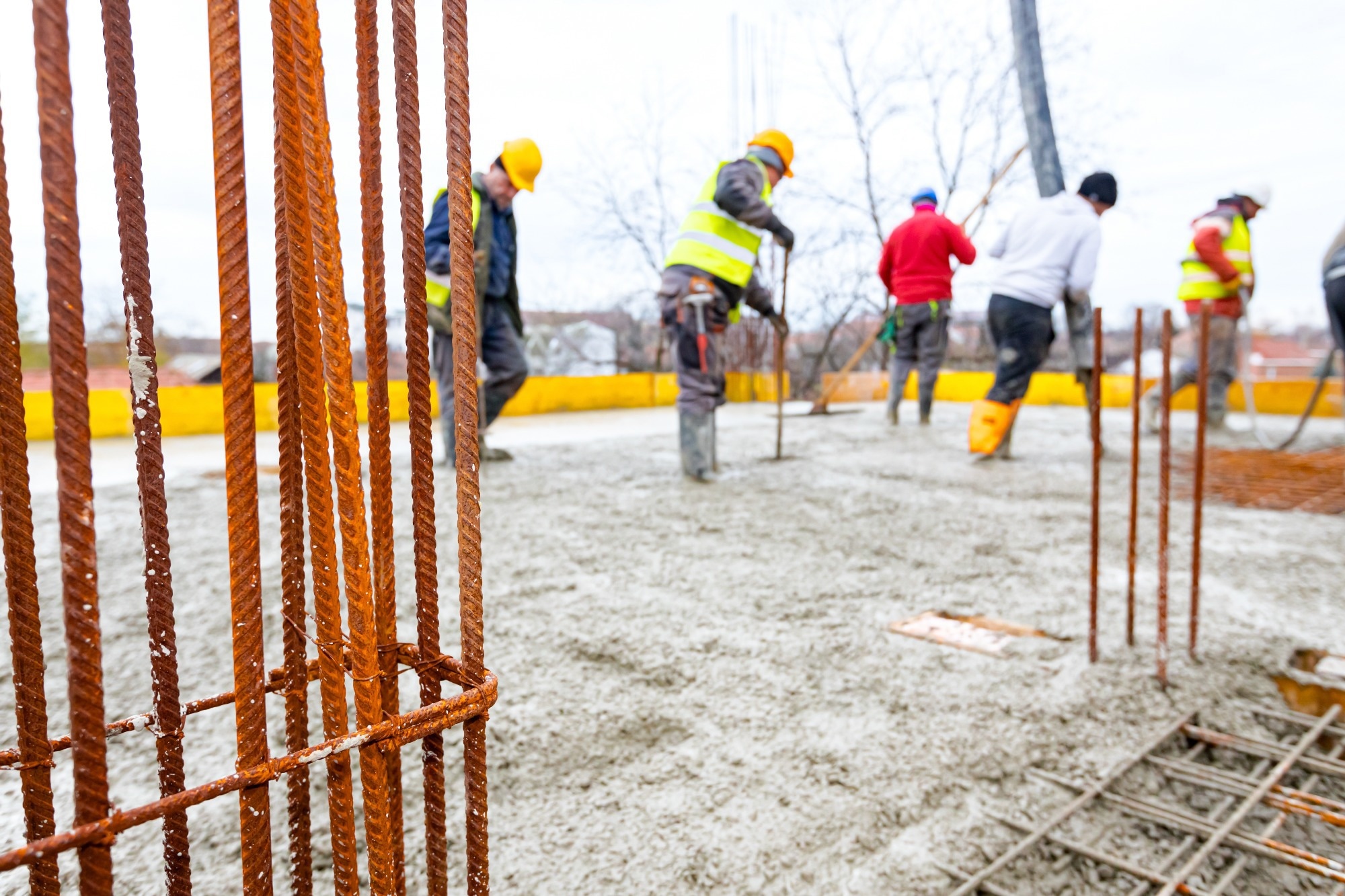
Study: Effect of CO2 curing on the performance of the passivation film of steel bars in cement-based materials. Image Credit: Roman023_photography/Shutterstock.com
Carbon dioxide (CO2) curing is gaining traction as a method to improve both the durability and sustainability of cement-based materials. A recent study published in npj Materials Degradation examined its effect on the passivation film of steel reinforcement embedded in concrete.
The researchers found that CO2 curing accelerates the formation of the passivation film and improves its stability, enhancing corrosion resistance at the steel–concrete interface. The approach also enables carbon utilization, supporting lower-emission construction processes.
The Mechanisms Behind CO2 Curing
CO2 curing is an advanced technique in which fresh concrete is exposed to high concentrations of CO2 during the early curing stage. This process promotes carbonation reactions between CO2 and calcium hydroxide in the cement paste, forming calcium carbonate that enhances the microstructure, strength, and durability of concrete.
Compared to traditional methods like moisture or steam curing, CO2 curing reduces porosity and improves resistance to chloride penetration, thereby enhancing the protective environment around embedded steel reinforcement. This stabilization improves the formation and stability of the passivation layer, which is key to preventing corrosion.
The study attributes this accelerated passivation process to increased oxygen partial pressure around the steel bars during early-stage carbonation, which promotes rapid formation of the protective film.
While conventional carbonation can reduce concrete alkalinity and increase corrosion risk, CO2 curing applied at early stages allows the pH to recover after curing, maintaining a protective environment for steel reinforcement.
In addition to improving performance, CO2 curing contributes to sustainability by utilizing carbon that would otherwise be released into the atmosphere. This benefit makes it a promising approach for developing durable and environmentally friendly reinforced concrete.
Investigating Passivation Mechanisms
To evaluate these effects, the researchers compared CO2-cured mortar with standard-cured specimens under controlled conditions. CO2 curing was conducted at elevated CO2 concentration, humidity, and temperature to promote carbonation.
Electrochemical techniques, including open circuit potential (OCP), electrochemical impedance spectroscopy (EIS), and potentiodynamic polarization (PDP), were used to assess the formation and stability of the passivation film. The samples were also subjected to accelerated chloride drying–wetting cycles to simulate aggressive exposure conditions.
Microstructural and chemical characteristics of the passivation film were analysed using scanning electron microscopy (SEM), X-ray photoelectron spectroscopy (XPS), and energy-dispersive spectroscopy (EDS), providing insight into film morphology, composition, and corrosion resistance.
Key Outcomes of CO2 Curing
CO2 curing significantly accelerated passivation. The passivation period was reduced to approximately 10 days, compared to around 21–22 days under standard curing, with earlier stabilisation of electrochemical potential.
Although the passivation film formed under CO2 curing was slightly thinner (4.06 nm compared to 4.73 nm), it exhibited higher electrochemical stability. Charge transfer resistance increased to 458.54 kΩ·cm2, compared to 384.49 kΩ·cm2 in standard-cured specimens.
This improved performance is attributed to a combination of a denser microstructure, increased oxygen availability during early curing, and a more favourable Fe2+/Fe3+ ratio (0.90 versus 0.63), all of which contribute to enhanced corrosion resistance.
Under chloride exposure, CO2 curing delayed depassivation.
Standard-cured specimens began to depassivate after 18 drying–wetting cycles, whereas CO2-cured specimens maintained protection for up to 30 cycles. This extended resistance highlights the effectiveness of CO2 curing in improving durability in aggressive environments.
Applications for Sustainable Construction Practices
The findings highlight the potential of CO2 curing to enhance both durability and sustainability in reinforced concrete.
By improving the stability of the passivation film, the approach reduces the risk of steel corrosion in chloride-rich environments such as marine structures and de-iced infrastructure. It also offers the potential to extend service life and reduce maintenance requirements, while contributing to carbon utilization in construction processes.
Future Directions in CO2 Curing Research
The study shows that CO2 curing can improve corrosion resistance at the reinforcement level by accelerating passivation, enhancing electrochemical stability, and delaying depassivation.
Future work is expected to focus on optimising curing conditions, assessing long-term performance under varied environmental conditions, and evaluating large-scale implementation in construction practices.
Journal Reference
Guo, B., & et al. (2026). Effect of CO2 curing on the performance of the passivation film of steel bars in cement-based materials. npj Mater Degrad. DOI: 10.1038/s41529-026-00762-3, https://www.nature.com/articles/s41529-026-00762-3
Disclaimer: The views expressed here are those of the author expressed in their private capacity and do not necessarily represent the views of AZoM.com Limited T/A AZoNetwork the owner and operator of this website. This disclaimer forms part of the Terms and conditions of use of this website.